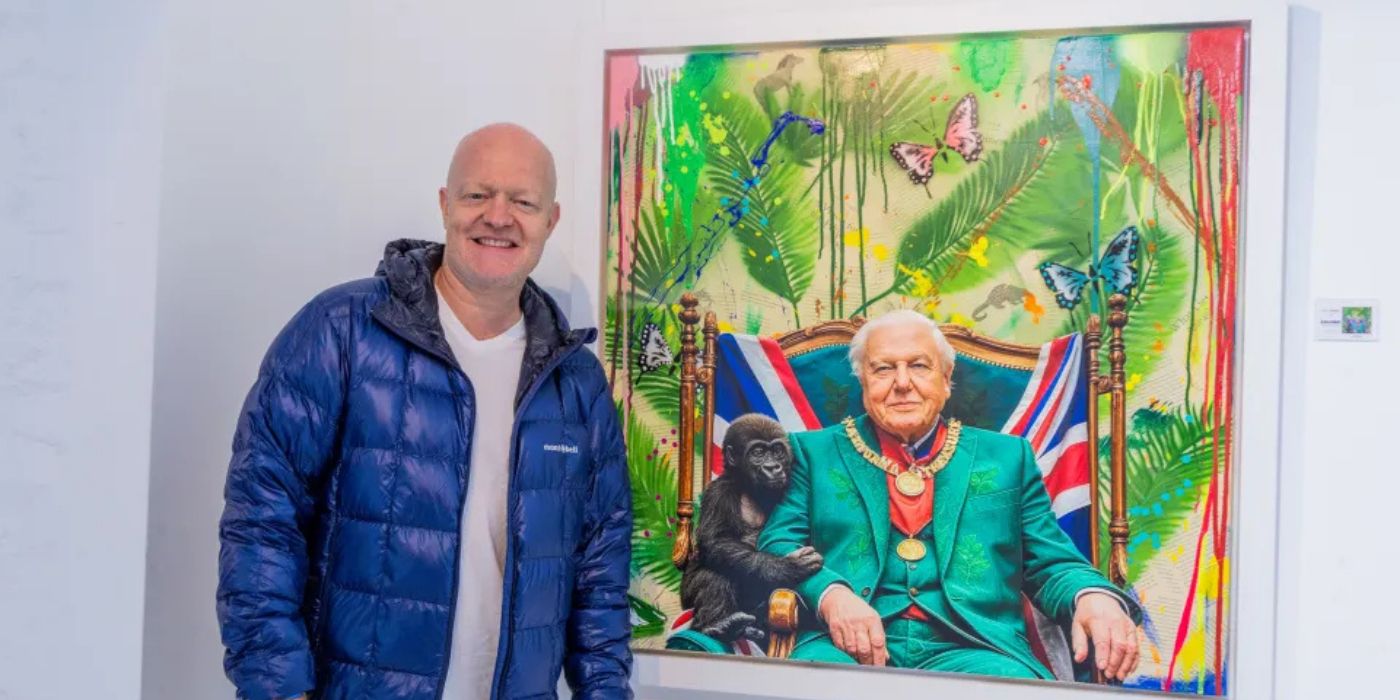

Jake Wood, best known for his role as Max Branning on EastEnders, has closed his first solo art exhibition and apologised after backlash over the presence of AI-generated elements in some of his portraits.
The show, titled Icons, had been on display at the Indelible Fine Art gallery and was intended to showcase Wood’s creative talents while raising money and awareness for Dementia UK. The exhibition featured colourful portraits of figures including Sir David Attenborough and Dame Barbara Windsor, and a large mural celebrating Winston Churchill ahead of VE Day. It was designed to be a heartfelt project with funds from sales going to help people affected by dementia.
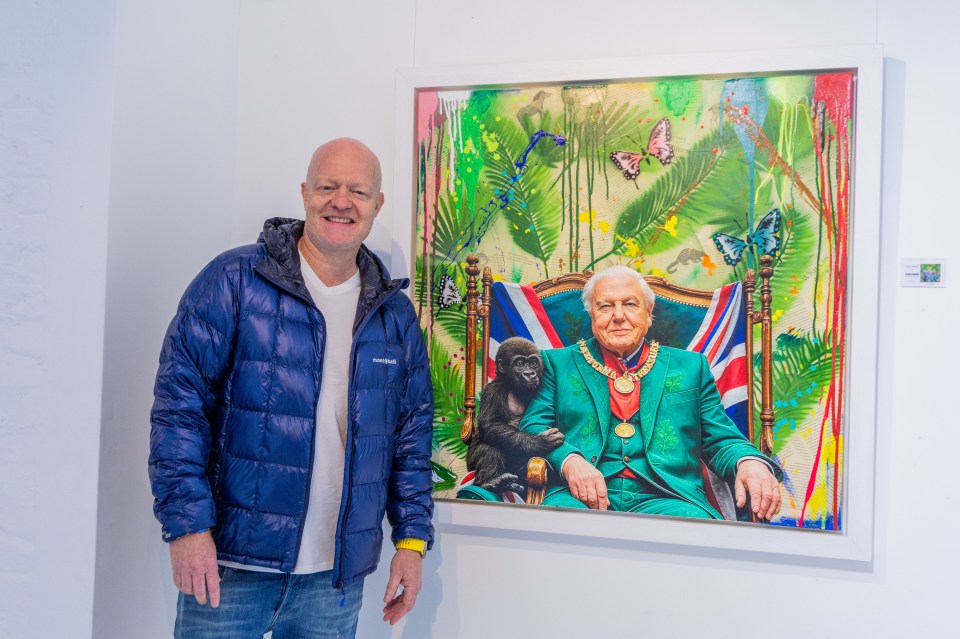
However, controversy erupted after critics noticed that two of the images, portraying Attenborough and Donald Trump, contained AI-generated source imagery. In response to the mounting criticism and abusive messages directed at the gallery, the organisers decided to bring the exhibition to an early close, saying the original message behind the show had been lost amid the reaction.
Wood issued a statement acknowledging the concerns and apologising for the way the exhibition had unfolded. He explained that the two pieces in question used existing AI-generated imagery created in 2024 and were not personally generated by him. He said that he has since stopped using AI in his art and does not intend to do so in the future.
“I think it’s important to address some of the discussion surrounding my exhibition currently on display at Indelible Fine Art Gallery,”
He wrote, adding that he understood the debates around AI in art and respected the opinions being expressed. He described his creative journey as one of development and learning, and apologised to the gallery for the negative attention it had drawn.
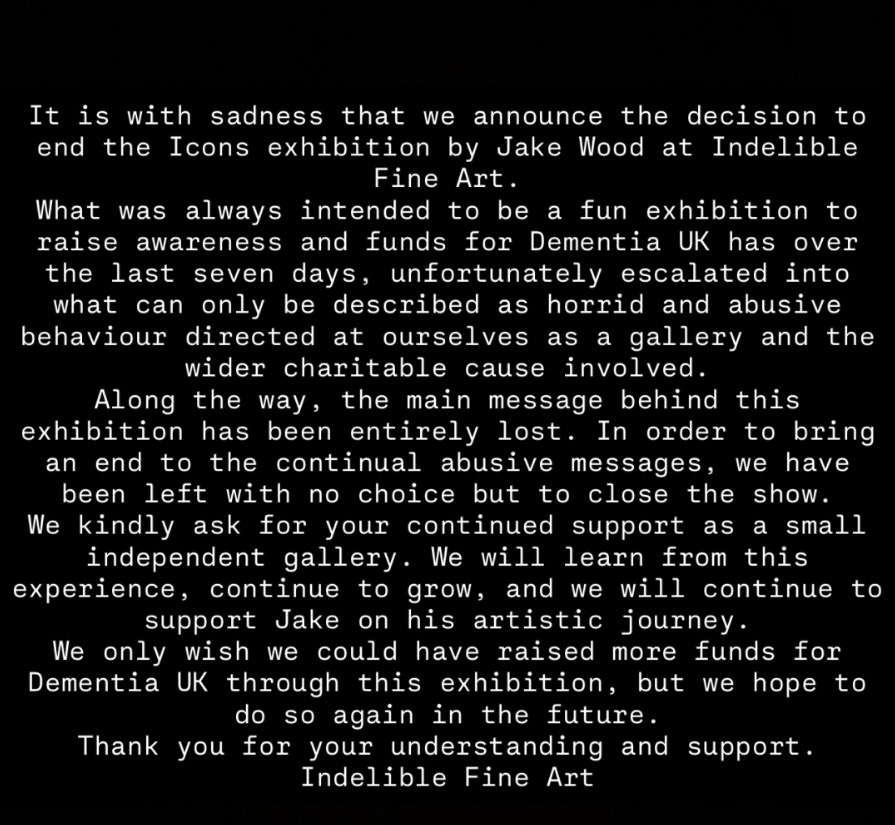
Wood also reaffirmed his commitment to the original charitable intention, pledging to donate all profits from the exhibition to Dementia UK. According to those close to the project, the art had attracted both supporters and critics online before the closure.
The reaction on social media was mixed, with many people weighing in on the broader debate about technology in art. One commenter wrote,
“What did he do wrong though??? What are the rules in art apart from it should be original?”
Another posted,
“People need to accept the fact that AI is here now and it is here to stay. It has and will be incorporated in all aspects of our lives, including the Arts…get with the programme.”
A third said,
“I can’t understand why in this day and age anyone cares what other people think. Who gives a fck how they were made. Honestly, people will f*cking moan at anything.”
The incident taps into a wider, ongoing conversation across the art world about how artificial intelligence is changing creative practice, legitimacy and ownership. Artists and critics alike have debated whether AI-assisted or AI-inspired works should be treated the same as more traditional creations, and how to balance innovation with respect for human craft.
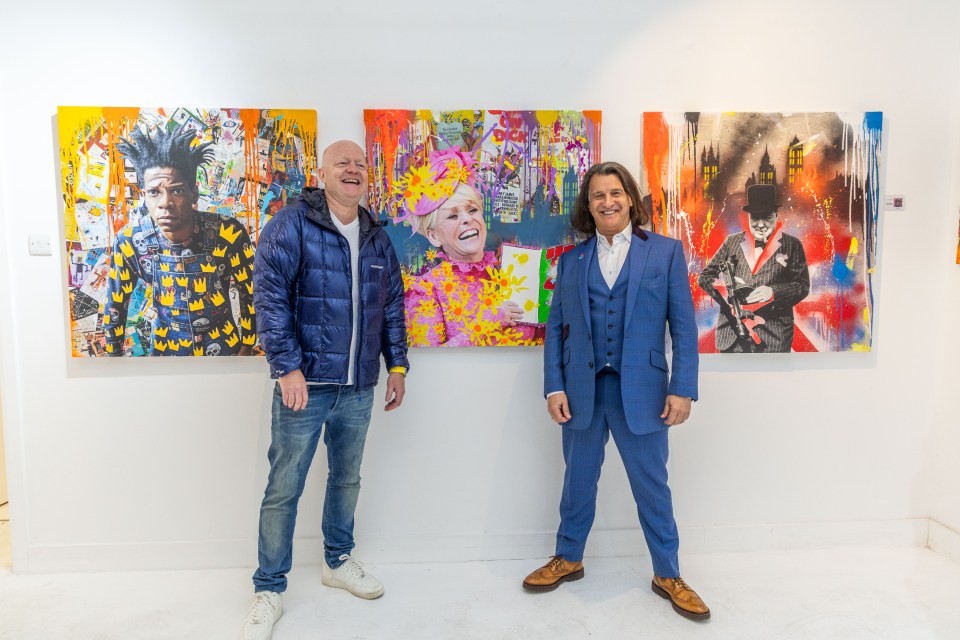
Despite the controversy, many have backed Wood’s wider artistic efforts, pointing out his longstanding career and the charitable aim of the exhibition. Supporters noted that public art has always evolved in response to new tools and techniques, and that AI’s role in creativity is increasingly central to those conversations. The gallery behind the exhibition released its own statement saying it regretted having to close the show early, but emphasised its ongoing support for Wood’s artistic growth and its hope that future projects can still benefit charity causes without unnecessary distraction.
As the debate continues, Wood’s experience stands as a high profile example of how artistic boundaries are being challenged and negotiated in an era when technology intersects with tradition, and when public expectation around creative authenticity remains deeply divisive.
.png)


.png)
.png)
.png)
.svg)
.svg)
.svg)