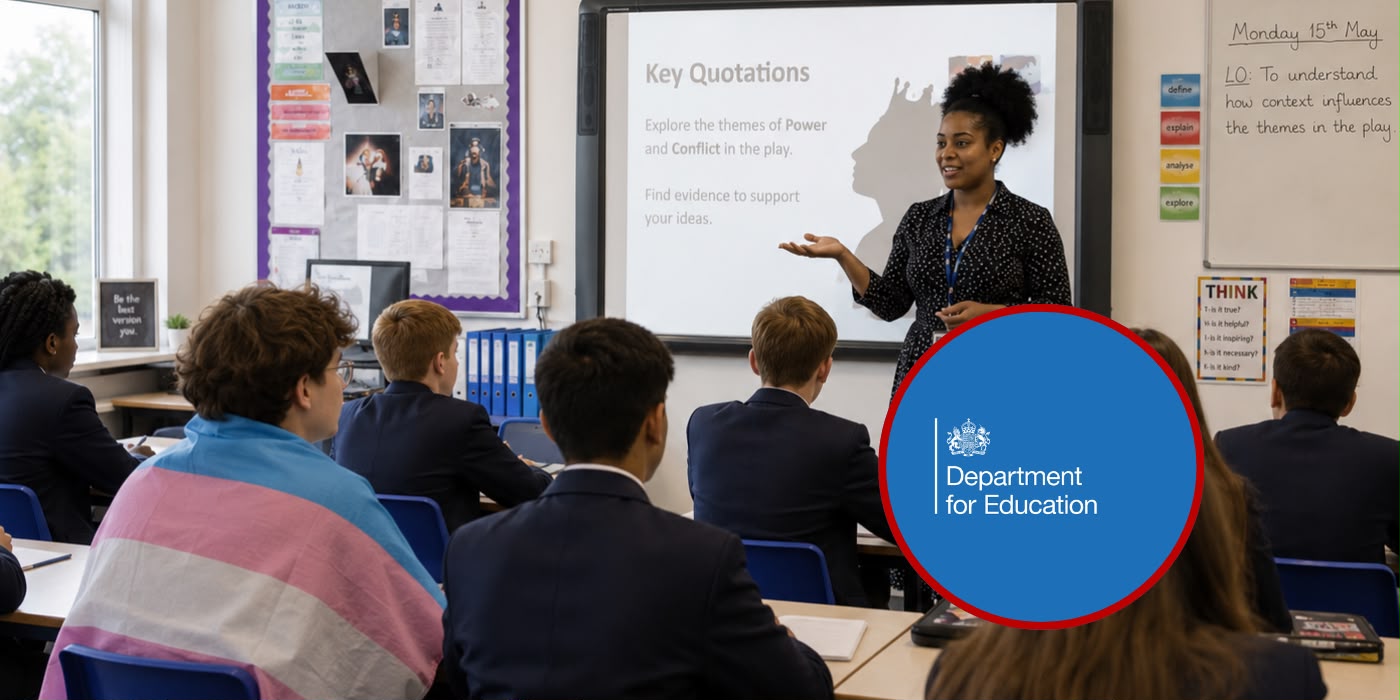

Fresh government guidance for schools in England has reignited debate over the role parents should play when children begin questioning their gender identity.
Under the updated statutory safeguarding guidance from the Department for Education, schools are not required to inform parents if a pupil is simply asking questions or exploring their feelings about gender. However, if a child asks to socially transition at school, for example by changing their name, pronouns or other aspects of how they are recognised, schools are generally expected to involve parents unless there is a genuine safeguarding reason not to. The guidance also makes clear that every case should be considered individually, with the child's welfare remaining the primary concern.
.jpeg)
The guidance places significant emphasis on safeguarding, stating that parents' views should carry "great weight" when decisions are made about any form of social transition. At the same time, it recognises that there may be exceptional circumstances where informing parents could place a child at risk, meaning schools must carefully assess each situation before deciding how to proceed. Schools have also been instructed to review any existing cases of social transition before the start of the new academic year.
The updated advice follows recommendations made in the independent Cass Review into NHS gender services for children and young people, which called for a more cautious, evidence-based approach to supporting gender-questioning children. The guidance also reiterates that schools should maintain single-sex spaces and carefully consider issues relating to sports participation, privacy and safeguarding.
.jpeg)
The announcement has quickly divided opinion online, with thousands of people debating where the balance should lie between protecting vulnerable children and ensuring parents remain involved in important decisions affecting their children. One person commented:
"If your child is more comfortable in confiding in a teacher than to you as a parent, they probably don't feel safe with you. Be better parents to your kids so they know they can come to you in the first place."
Others strongly disagreed.
"This is very dangerous. No child should be encouraged to keep anything from their parents. No wonder why teachers get away with all sorts."
Another wrote:
"Until the child is 18, a parent should be informed on everything in my opinion."
.jpeg)
Others argued that trust between children and their parents cannot be forced.
One person commented:
"Some of you guys are proving yourselves to be unsafe spaces kids literally run away from. Your kids may be an extension of you but they AREN'T you. If you are such a good parent, your kid will want to communicate that you. So far, these comments are why this is probably being implemented."
The issue has remained one of the most sensitive areas of education policy in recent years, with campaign groups, teaching unions, medical professionals and politicians expressing differing views on how schools should respond when pupils question their gender identity. While some believe parental involvement should be automatic in almost every circumstance, others argue there must remain flexibility where safeguarding concerns exist.
As the new guidance begins to take effect, it is likely the conversation around parental rights, child welfare and safeguarding in schools will continue well beyond the classroom.
.png)


.png)
.png)
.png)
.svg)
.svg)
.svg)