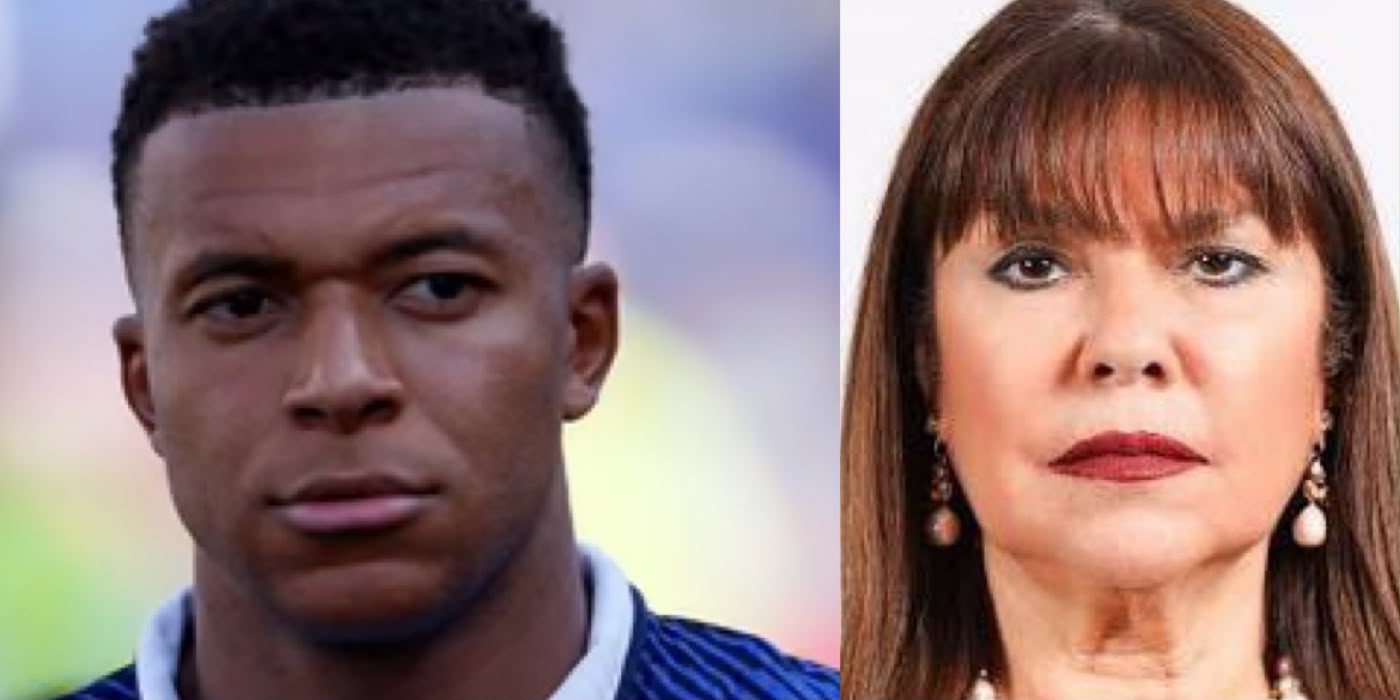

A place in the FIFA World Cup quarter-finals was only the beginning of the headlines for Kylian Mbappé.
Just days after scoring the winning goal against Paraguay in France's tense Round of 16 victory, the French captain found himself at the centre of an international row that has since stretched far beyond football.
What began with an inflammatory social media post from Paraguayan senator Celeste Amarilla has evolved into a diplomatic controversy involving France's President, the French Football Federation (FFF), Real Madrid and French prosecutors, while reigniting wider conversations about racism in football, national identity and the responsibilities of public figures.
The controversy stems from France's 1-0 victory over Paraguay in the Round of 16 of the 2026 FIFA World Cup.
After a tightly contested match, Mbappé converted the decisive penalty to send France through to the quarter-finals. The result ended what had been one of Paraguay's most memorable World Cup campaigns in recent history, with the South American nation reaching the knockout stages after impressing throughout the group phase.
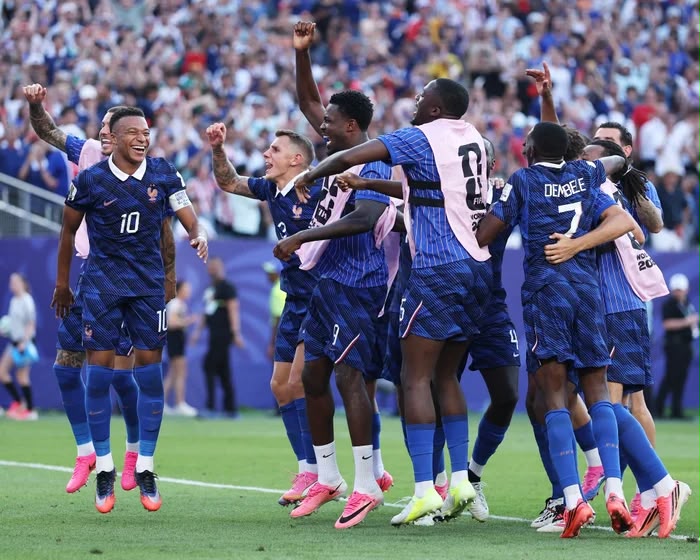
Emotions spilled over after the final whistle, with tensions reportedly flaring between players as members of both squads exchanged words following Paraguay's elimination. While heated post-match exchanges are nothing new in football, few expected the fallout to escalate into an international political dispute.
Shortly after the match, Paraguayan senator Celeste Amarilla published a post on X aimed directly at Mbappé.
The senator wrote:
"This brute hasn't ever learned to write. Instead of breastmilk, he grew up sucking on coconuts, and the most educated creatures he ever heard were chimpanzees.
You should've given him the middle finger, Orlando Gill.
A colonised Cameroonian, pretending to be French, resentful, newly rich, arrogant and ugly.
He was nervous and scared to death all game, like his whole team. They didn't even manage to score a single goal until they got lucky with a penalty.
The only thing many of us blame the team for is not giving him a full-handed slap at the end of the game. I'm not even a football fan."
.jpeg)
The comments spread rapidly across social media, with many users describing them as overtly racist because of the references to coconuts, chimpanzees and Mbappé's African heritage. Others also criticised Amarilla's remarks about his nationality, particularly her description of him as a "Cameroonian pretending to be French", despite Mbappé being born in Paris to a French mother and a Cameroonian father, and representing France throughout his international career.
Human rights groups and anti-racism organisations have long identified comparisons between Black people and primates as racist tropes with a long historical association with dehumanisation. Within hours, Amarilla's post had become one of the tournament's most widely discussed off-pitch stories.
For two days, Mbappé remained silent before responding publicly on 6 July with a lengthy statement addressed directly to the senator.
Unlike Amarilla's remarks, Mbappé's response focused not only on the abuse directed at him but also on the image he believed her comments projected of Paraguay.
.jpeg)
He wrote:
"Madame Celeste Amarilla,
You are a despicable woman and unworthy of your position.
You do not represent Paraguay, that country which has sweated with passion and honour throughout the competition. Through your recklessness and your brazen racism, the entire world has already forgotten the journey and the historic effort that your players accomplished during this World Cup, making way for an incompetent woman who gives the worst possible image of her country.
I will never allow people like her the freedom to spread their hatred and racism across the world."
Rather than responding to each insult individually, Mbappé framed the issue as one of racism and public responsibility, arguing that Amarilla's position as an elected senator made her comments particularly damaging.
.jpeg)
His decision to begin the statement with the formal address "Madame Celeste Amarilla" also attracted attention online, with many praising the measured tone of his response despite the nature of the abuse.
One social media user wrote:
"He even showed respect by calling her 'Madame', he should have just said 'Yo Celeste!!'"
Mbappé's statement prompted swift backing from several of France's most prominent institutions.
The French Football Federation condemned Amarilla's remarks, saying:
"The racist remarks made by Paraguayan Senator Celeste Amarilla targeting Kylian Mbappé are utterly abhorrent and unacceptable..."
The FFF confirmed it would formally refer the matter to the Paris prosecutor's office, arguing that racist abuse directed towards one of France's national team players could not go unanswered. Under French law, allegations relating to racist abuse can be investigated where there is a sufficient connection to France, particularly when a French citizen is the alleged victim.
.jpeg)
Support also came from French President Emmanuel Macron, who posted:
"Another goal for Kylian Mbappé. Against racism this time. All my support. When words defile, our values respond, dignity, respect, fraternity."
.jpeg)
Macron's intervention elevated the dispute beyond football, transforming it into a matter of national significance.
Real Madrid, Mbappé's club, also released a statement condemning the xenophobic remarks and reaffirming its full support for the forward.
Rather than retracting her comments, Amarilla doubled down.
She later published an open letter addressed to Mbappé in which she defended her position and rejected accusations of racism.
The senator argued that her criticism had been prompted by what she claimed was Mbappé's behaviour during and after the match. She insisted her comments had been taken out of context, denied acting out of racial prejudice and maintained that she was exercising her right to freedom of expression.
.jpeg)
Amarilla also refused to apologise, instead calling on Mbappé to acknowledge what she described as his own conduct.
Her response shifted the conversation further into the political arena, with debate moving beyond the original post to questions about whether elected representatives should face consequences for inflammatory language shared on social media.
The dispute generated thousands of reactions online.
While many users praised Mbappé's measured response, others criticised Amarilla for refusing to apologise. One commenter wrote:
"She racially abused him, then shifted the blame by threatening him with a 'gender violence' lawsuit to force an apology… Time of irritation: 11:32AM!"
.jpeg)
Another reflected on the wider implications of the controversy:
"Us black/African people have no ally out there. They think they are better than us. We must learn to work together and build bridges as well as break down walls. As well as get our economic power up. She wouldn't say this to a Jewish person because she knows the consequences would be significant!"
Others praised Mbappé for refusing to respond with personal insults, instead framing his statement around racism, accountability and the responsibilities that come with holding public office.
The consequences of the controversy continued to grow in the days that followed.
Following the FFF's complaint, French prosecutors opened a preliminary investigation into Amarilla's remarks. Meanwhile, Paraguay's government publicly distanced itself from the senator's comments, stressing that her views did not represent the country's official position.
The row also overshadowed Paraguay's historic World Cup campaign, something Mbappé himself acknowledged when he wrote that Amarilla's actions had caused the world to forget "the journey and the historic effort" of Paraguay's players.
What began as a World Cup Round of 16 fixture has become one of the tournament's defining off-pitch stories.
A single social media post led to accusations of racism, a response from Kylian Mbappé, condemnation from the French Football Federation, backing from President Emmanuel Macron and Real Madrid, an investigation by French prosecutors, and an open letter from a sitting senator who continues to defend her remarks.
As the debate continues, the incident serves as another reminder of how quickly events on the football pitch can spill into politics, diplomacy and wider conversations about racism, identity and accountability in public life.
.png)


.png)
.png)
.png)
.svg)
.svg)
.svg)