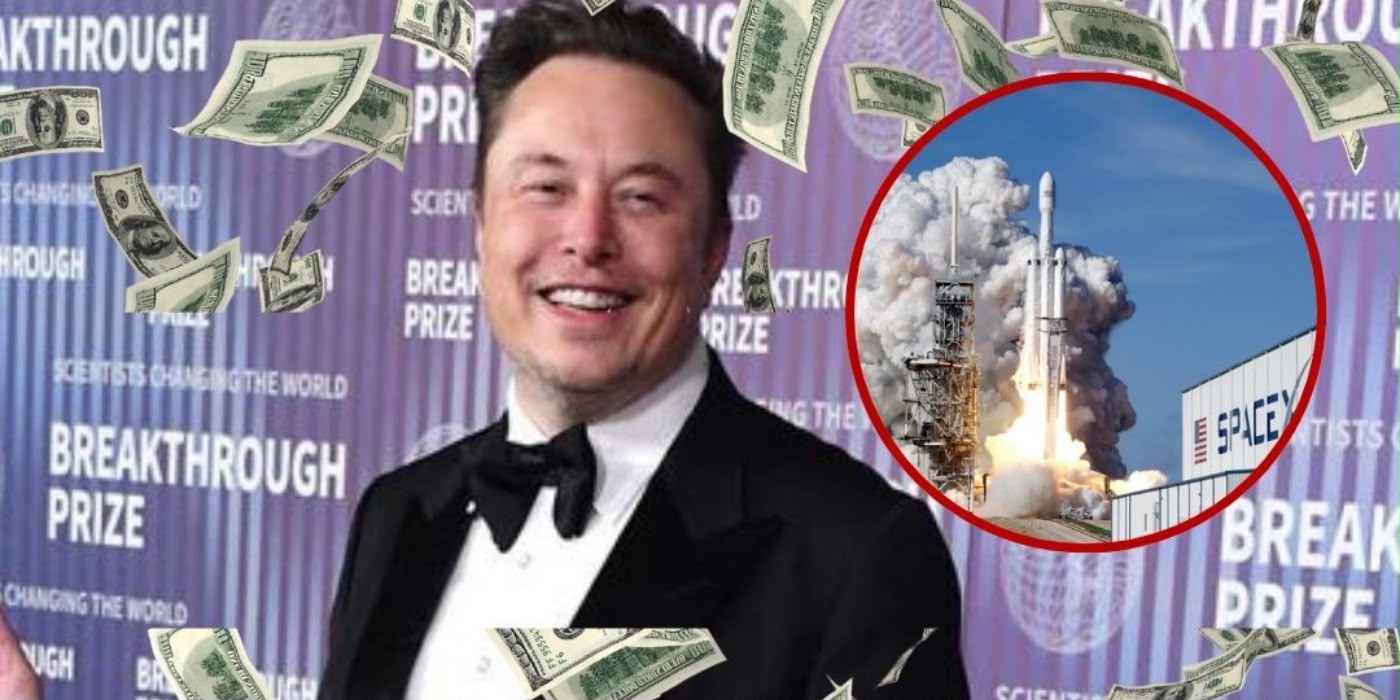

Elon Musk has entered a financial category previously thought to exist only in theory, becoming the world's first trillionaire after a surge in the value of his business empire pushed his estimated net worth beyond the $1 trillion (£740 billion) mark.
The historic milestone follows the hugely anticipated public listing of SpaceX, the private aerospace company Musk founded in 2002. The flotation proved to be one of the biggest events in financial market history, with investors rushing to buy shares in the company that has transformed the commercial space industry over the last two decades.
Reports indicate that SpaceX raised around $75 billion (£55.5 billion) through its initial public offering, giving the company an estimated valuation of approximately $1.77 trillion (£1.31 trillion). The listing instantly made it one of the most valuable companies on the planet and dramatically increased the value of Musk's personal stake in the business.
.jpeg)
The achievement marks the culmination of a remarkable rise for the South African-born entrepreneur, who first became a millionaire through the sale of software company Zip2 before later helping establish PayPal, one of the world's first major online payment platforms.
After PayPal was acquired by eBay in 2002, Musk used much of the money he earned to invest in a series of ambitious ventures that many initially considered unrealistic. Those ventures included electric car manufacturer Tesla, rocket company SpaceX and, years later, artificial intelligence company xAI.
At various points throughout his career, Musk faced significant financial and professional setbacks. Both Tesla and SpaceX came close to collapse during the late 2000s, with Musk previously admitting that he poured much of his personal fortune into keeping the companies alive. Today, both businesses sit among the most valuable and influential companies in their respective industries.
.jpeg)
SpaceX has become particularly significant in recent years. The company revolutionised space travel through reusable rocket technology, significantly reducing launch costs and helping establish itself as a major partner for both commercial customers and government agencies. Its Starlink satellite network has also expanded rapidly across the globe, providing internet access in remote locations and conflict zones.
While SpaceX's stock market debut played the biggest role in pushing Musk beyond the trillion-dollar threshold, his fortune remains spread across several businesses. Alongside SpaceX, Musk maintains substantial stakes in Tesla, artificial intelligence firm xAI, brain-computer interface company Neuralink and infrastructure venture The Boring Company.
.jpeg)
The scale of Musk's wealth has inevitably reignited debate about economic inequality. One person commented:
"Disgusting! No one in this lifetime should be a trillionaire in this time and age!"
Another wrote:
"People don't realise how dangerous this is. This guy has been the one spreading hate and rhetoric on immigration. He's the one backing hate groups across the world."
A third added:
"And how many lives have been destroyed as a result…bun this guy!"
Much of the criticism directed at Musk in recent years has centred not on his businesses, but on his increasingly active role in political and cultural debates.
Since purchasing Twitter and rebranding the platform as X, Musk has become one of the most influential voices online. His posts regularly attract millions of views and often spark international discussion. Topics he frequently comments on include immigration, free speech, government policy, crime, elections and social issues.
Critics argue that some of his rhetoric surrounding immigration and multiculturalism has contributed to hostility towards migrant communities and minority groups. Others have accused him of engaging with or amplifying controversial figures and accounts whose views many regard as divisive or inflammatory.
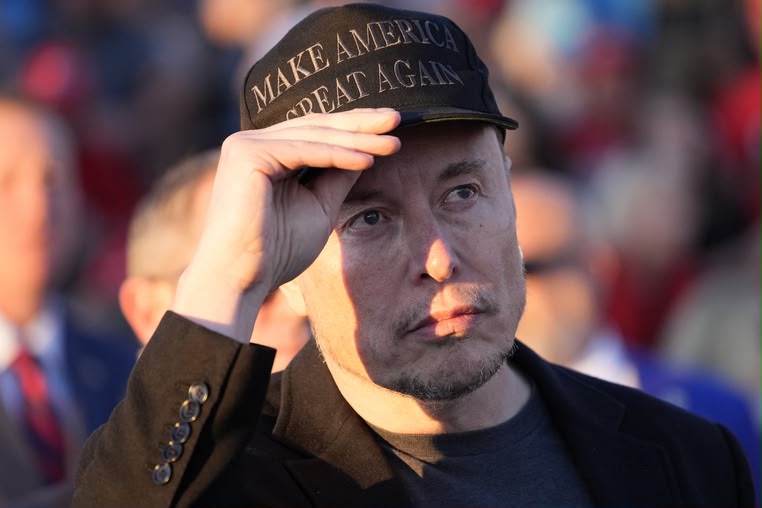
His supporters strongly reject those accusations. They argue that Musk is simply exercising free speech, challenging established institutions and encouraging open debate on topics many believe are often avoided by mainstream politicians and media outlets.
The billionaire's political influence has become particularly noticeable in Europe and North America, where his comments regularly make headlines. Whether discussing migration policy, policing, elections or government spending, Musk's opinions often generate reactions comparable to those of major political leaders.
For many observers, that influence is what makes his trillionaire status feel different from previous records set by wealthy individuals.
The world's richest people have traditionally exerted power through investments, lobbying or ownership of major companies. Musk, however, possesses an enormous social media platform, direct access to political leaders, influence over critical technologies and ownership stakes in businesses operating in sectors ranging from artificial intelligence to defence-related space infrastructure.
The milestone has therefore prompted questions not only about wealth, but also about power.
Economists and campaigners have long warned that the gap between the world's wealthiest individuals and ordinary households continues to widen. At a time when many countries are grappling with housing shortages, rising living costs and stagnant wages, the emergence of the world's first trillionaire is likely to intensify conversations about taxation, regulation and wealth distribution.
Supporters counter that Musk's fortune is largely tied to company ownership rather than cash and argue that the value created by businesses such as Tesla and SpaceX has generated jobs, innovation and technological advancements that benefit society more broadly.
.jpeg)
Whatever side of the debate people fall on, there is little doubt that the moment represents a significant chapter in economic history.
For decades, becoming a billionaire was viewed as the ultimate symbol of financial success. Then came the era of the centibillionaire. Now, for the first time, a single individual has crossed into trillionaire territory.
Whether Elon Musk is remembered as one of history's greatest innovators or as a symbol of unprecedented wealth concentration, his entry into the trillionaire club has ensured that discussions around money, influence and power are unlikely to disappear anytime soon.
.png)


.png)
.png)
.png)
.svg)
.svg)
.svg)