.png)

A search operation is underway in eastern India after a wild elephant killed at least 22 people in a series of attacks across the state of Jharkhand, according to local authorities. The deaths have occurred since the beginning of January, mainly in rural villages within the West Singhbhum district. Officials say many of the attacks took place at night, with victims including entire families and at least one forest department employee. Residents have described sudden encounters with the animal near homes, footpaths, and forest edges, often with little warning.
Forest officials believe the elephant is a single tusked male, likely separated from its herd. Experts say lone male elephants can become disoriented and aggressive, especially when under stress or unable to follow normal migration paths. Indian authorities have attempted to tranquillise the animal on at least three occasions, but efforts have so far been unsuccessful due to difficult terrain and the elephant’s unpredictable movements.
More than 100 forest personnel, wildlife specialists, and tracking teams have been deployed in the area, with reinforcements brought in from neighbouring states. Drones, patrol units, and monitoring teams are being used to locate the animal and prevent further fatalities. Local officials have issued safety advisories urging residents to remain indoors at night, avoid forested areas, and report sightings immediately.
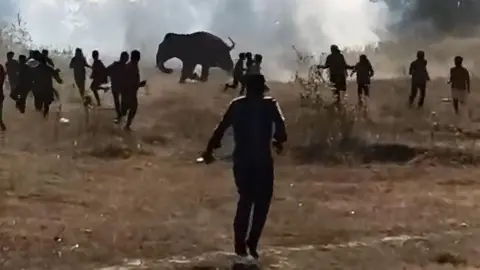
Conservation groups note that shrinking forest cover, mining activity, road construction, and agricultural expansion have increasingly pushed elephants into close contact with human settlements. Disrupted migration pathways and reduced access to food and water sources have further increased the risk of fatal encounters.
According to government data, hundreds of people and elephants die each year in India due to such conflicts. Wildlife experts argue that long-term solutions will require improved land-use planning, protected wildlife corridors, early warning systems for villages, and greater investment in coexistence strategies.
For now, authorities in Jharkhand say their priority remains locating the elephant and preventing further casualties, while balancing public safety with wildlife protection obligations.
.png)


.png)
.png)
.png)
.svg)
.svg)
.svg)