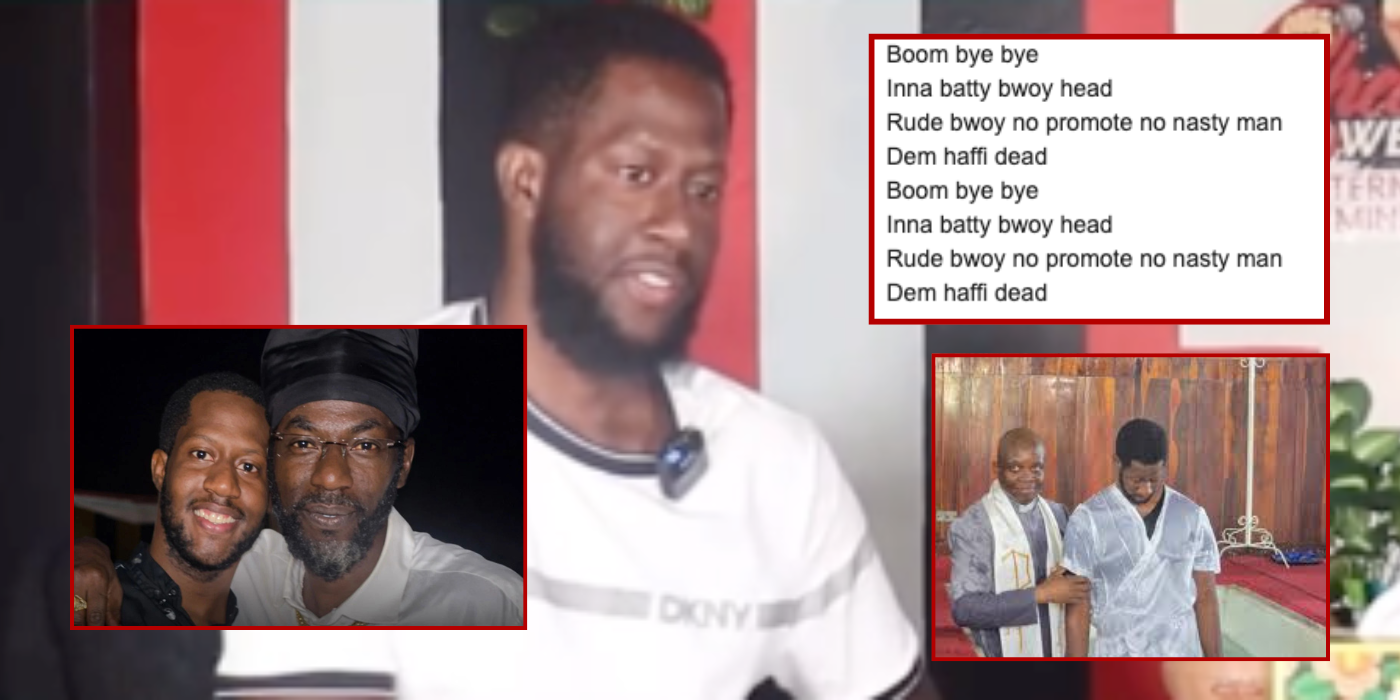

Jahazeil Myrie has opened up about a deeply personal period in his life, revealing that he “almost turned gay” during what he described as a time of emotional rejection and spiritual confusion.
Speaking on Sheena Power Talk, Myrie shared that he experienced a season of inner turmoil which led him to question aspects of his identity. He attributed these feelings to emotional struggles and a sense of spiritual disconnect, explaining that the period was marked by confusion rather than action. He stressed during the interview that he never acted on same-sex attraction.

According to Myrie, a turning point came when he reflected on his father Buju Banton’s 1992 song “Boom Bye Bye.” The track, released when Banton was just 19 years old and produced by Clifton “Specialist” Dillon, has long been one of the most controversial songs in dancehall history due to lyrics widely condemned for advocating violence against gay men.

Myrie said revisiting the song, alongside reconnecting with his faith, prompted him to return to church and recommit himself to Christianity. In 2024, he publicly affirmed his faith following his baptism, describing his spiritual journey as one that requires continual “inner work” and discipline.
The comments have sparked conversation online, with many pointing out the sensitive and complex intersection of religion, sexuality, and personal identity. Critics have long challenged the harmful impact of anti-LGBTQ+ rhetoric in certain strands of dancehall music, while supporters of Myrie argue that he was simply sharing his testimony about personal faith and growth.
Buju Banton, a Grammy-winning reggae artist, has faced decades of scrutiny over “Boom Bye Bye,” particularly as global conversations around LGBTQ+ rights have evolved. Although Banton has continued to perform internationally, the song remains a focal point in discussions about homophobia in music.
.png)
Myrie’s remarks come at a time when public figures speaking openly about faith and sexuality often generate strong reactions across social media. While some have expressed concern over the framing of his comments, others see his interview as part of a broader narrative about spiritual transformation and personal testimony within Christian communities.
.jpeg)
As debate continues, Myrie maintains that his journey is about faith, growth, and self-reflection, emphasising that his story is one of returning to what he believes is his spiritual foundation.
.png)


.jpeg)
.jpeg)
%20(2).png)
%20(1).png)
.svg)
.svg)
.svg)