

Wireless Festival organiser Melvin Benn has said that major sponsor Pepsi originally approved Kanye West, now legally known as Ye, as the headliner for the 2026 event before withdrawing its support amid intense public and political backlash, a development that has played out alongside praise from Jewish community leaders for the UK government’s decision to ban West from entering the country due to concerns about antisemitism.
Benn, the managing director of Festival Republic, told BBC Radio 4’s Today programme that Pepsi had signed off on West’s inclusion on the festival bill before later pulling its sponsorship following mounting public criticism over the artist’s past antisemitic comments and controversial actions. He said the festival understood that the multinational brand had initially backed West’s appearance, and that the subsequent withdrawal came as the controversy intensified and other partners also stepped back.
Benn said,
"Pepsi had signed off on the booking before withdrawing their sponsorship. They approved the decision to have him headline."
.jpeg)
The withdrawal of sponsorship from Pepsi was followed by other major names such as Diageo and PayPal, leaving organisers facing mounting pressure as the debate over the booking grew louder. Wireless had maintained that West was booked purely to headline on the strength of his music, with Benn urging people to consider giving individuals a second chance despite past conduct, and that partner sign-off had been part of the booking process.
.jpeg)
Critics responded by highlighting West’s history of inflammatory remarks, including praise for Adolf Hitler and other offensive content, which led to widespread concern about giving him a platform at one of the UK’s biggest music events. Political figures and community groups had called on the government to intervene, stressing the importance of confronting hate and protecting community cohesion.
The UK Home Office ultimately revoked West’s Electronic Travel Authorisation, effectively banning him from entering the country on the grounds that his presence “would not be conducive to the public good”, a decision that ultimately led to the cancellation of Wireless Festival 2026. The cancellation marked an unprecedented turn of events in British festival history, with ticket holders assured of full refunds.
.jpeg)
The Board of Deputies of British Jews welcomed the government’s stance on the travel ban, saying,
“We welcome the government listening to the concerns of Jews in the UK and preventing Kanye West from entering the country,”
And urging the arts and culture sector to confront what they described as “the scourge of antisemitism”.
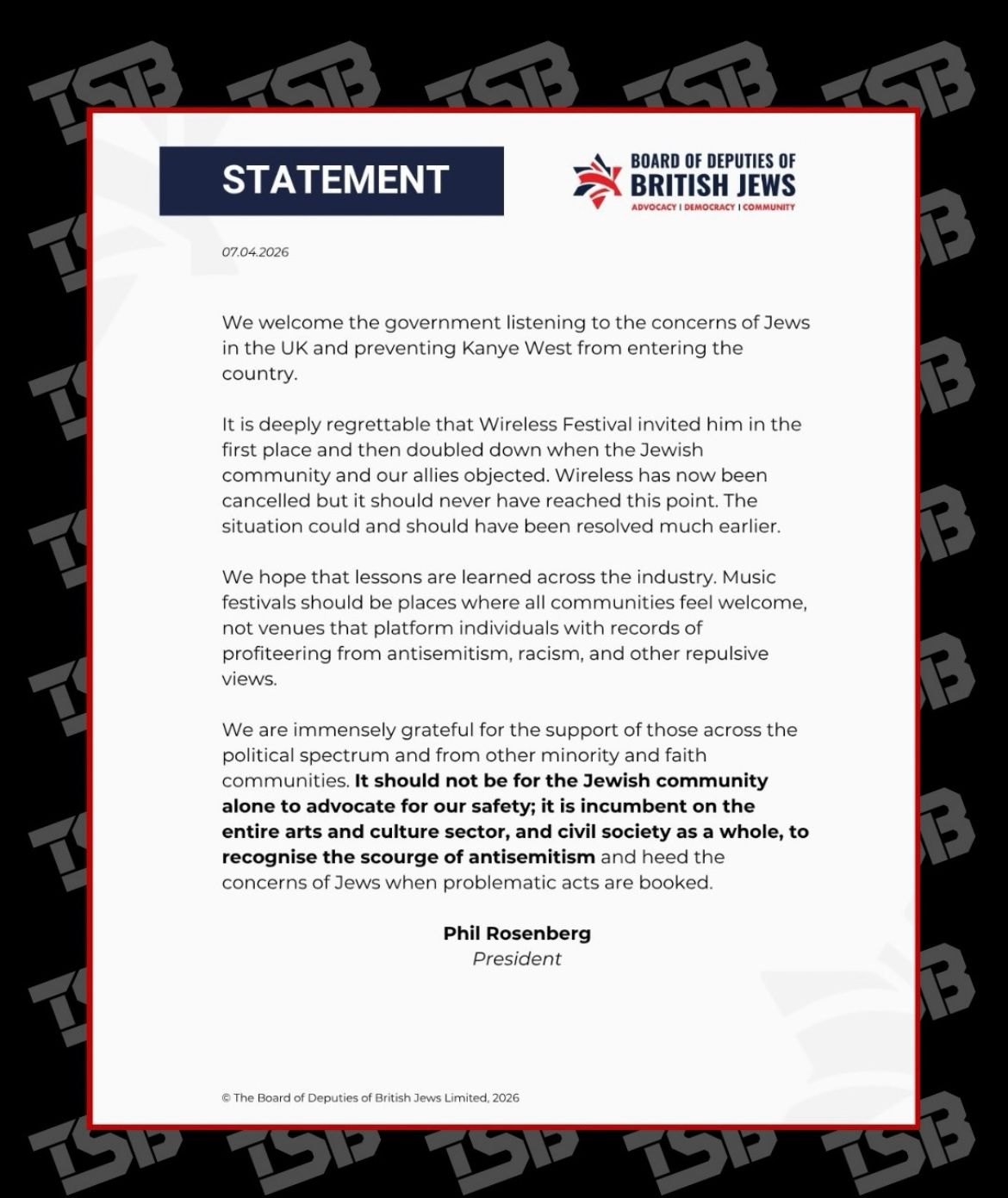
The board said festivals and cultural events should be inclusive and not platform individuals with records of antisemitism, racism or other repulsive views.
Supporters of the government’s decision applauded the emphasis on safety and solidarity, while others argued that cancelling a major cultural event raised questions about artistic freedom, freedom of expression and how commercial partners handle sponsorship decisions for controversial figures. The statement from the Board of Deputies was echoed by activists who said the episode highlighted the need for greater awareness in the cultural sector about the impact of hate speech and the responsibilities that come with high-profile platforms.
.jpeg)
That broader discussion about responsibility across the arts sector fed directly into scrutiny of how festival partners had handled the Wireless booking, with critics questioning whether sponsors had fully considered the implications before the backlash gathered pace.
As the debate widened, attention returned to Benn’s account of how commercial decisions were made behind the scenes, particularly his insistence that Pepsi had been fully briefed and initially comfortable with West headlining. He said the festival had been open about its plans from the outset and maintained that the later withdrawal reflected a shift in corporate caution rather than any lack of clarity from Wireless. Benn argued that the sequence of events showed how quickly sponsors can alter their position when public pressure builds, leaving organisers managing commitments that had been agreed long before the controversy reached its peak.
The news has sparked wider discussions about how commercial partners, festival organisers and government regulators balance artist lineups with social responsibilities, and whether companies should more carefully consider potential backlash before committing to major creative partnerships.
.png)


.png)
.png)
.png)
.svg)
.svg)
.svg)