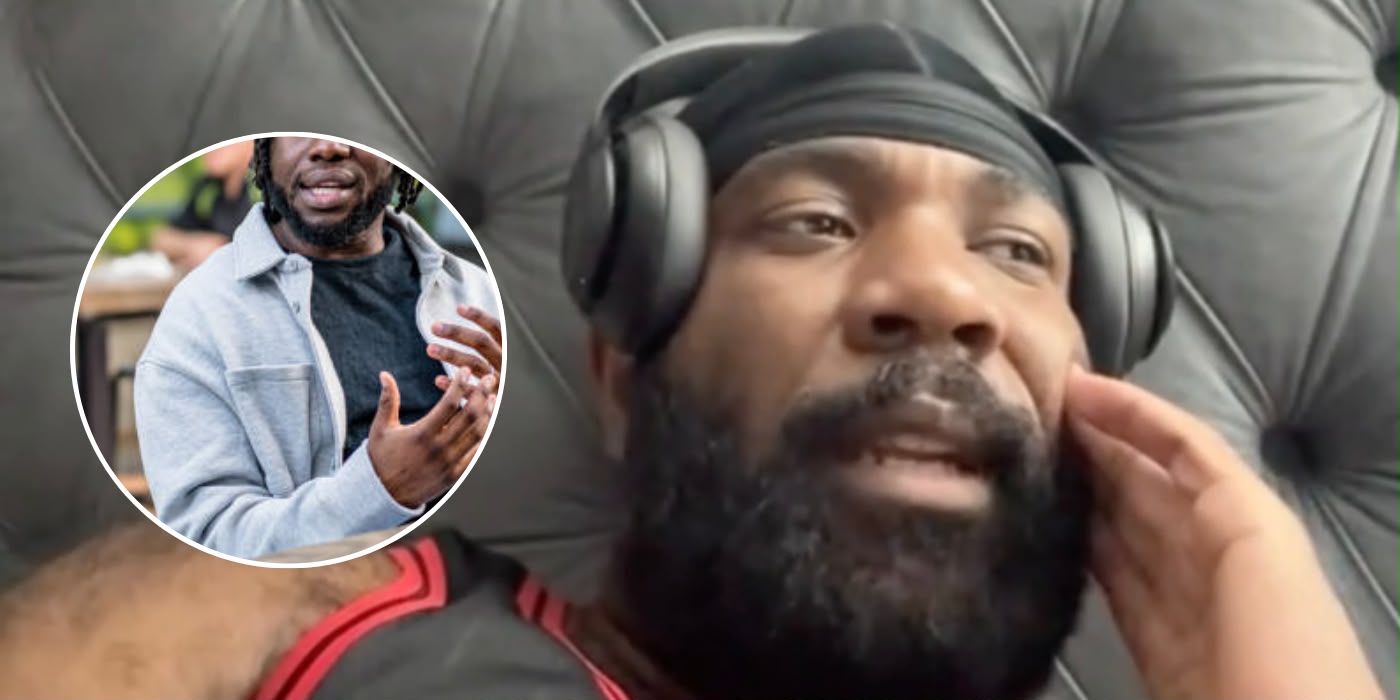

A TikTok creator has divided opinion after revealing the unconventional approach he takes to make sure the men in his friendship circle are treating women with respect.
Saint Huntsman shared a video explaining that he has reached a point in his life where he no longer feels comfortable taking his friends at face value. Instead, he wants to understand how they behave when interacting with women, believing some men present a completely different version of themselves depending on who they're with.
Using a recent experience with one of his friends as an example, Huntsman explained that while they were waiting for food together, he unexpectedly asked to look through his friend's phone. His intention, he said, was not to invade privacy for the sake of it, but to see the conversations his friend was having with women on messaging apps.
He explained that he wanted to know whether the way his friends speak about respecting women matched how they actually behaved in private.
"I want to see who girls see you as," he said.
.jpeg)
He added:
"I'm at this new level now of spot-checking my brethren's phones."
Throughout the video, Huntsman argued that too many men are able to hide harmful behaviour from their friendship groups by acting one way around male friends and another when they are alone with women.
He described these people as "shadowboxers", explaining that some men are physically abusive behind closed doors while presenting themselves as respectable in public.
"There's a lot of weird brothers out here who like to be two different guys. One guy to their friends, one guy to the girls," he said.
Huntsman also explained that, as someone with a growing public profile, he feels a responsibility to know exactly who he surrounds himself with. He said he would not want to be unknowingly associated with friends whose behaviour towards women could later come to light.
The creator went on to say he now pays attention to every aspect of his friends' relationships, from the emotional dynamic to the financial one. He criticised men who rely on women financially, saying he could not continue a friendship with someone who expected women to fund their lifestyle.
He also suggested there were certain behaviours that would immediately make him end a friendship, including discovering inappropriate or degrading conversations with women.
In one example, Huntsman joked that if he found a friend asking women to engage in bizarre sexual requests, the friendship would immediately be over because he did not want anyone assuming they shared the same attitudes.
He rounded off his message by encouraging men to stop blindly defending their friends without knowing how they actually treat women behind closed doors.
"2026, let's normalise nosiness, because we need to know who we're associating with."
The discussion has resonated with many people online because it taps into a wider conversation that has become increasingly prominent in UK culture, particularly within Black communities, where there has been growing debate about whether men hold one another accountable enough when it comes to their treatment of women.
Across podcasts, social media and community discussions, many women have argued that abusive, manipulative or misogynistic behaviour often goes unchecked because friends either never ask questions or choose to ignore warning signs. Others, however, believe there is a clear line between accountability and invading someone's privacy, arguing that trust should remain a key part of any friendship.
.jpeg)
Huntsman's comments have also sparked discussion around whether men should be more willing to challenge problematic behaviour, rather than waiting until allegations become public.
The video quickly divided viewers. One person commented:
“I get what he's saying. Dunno if I'd go to that extent. But it's hard to vouch for man when they can be one person to the mandem but a complete narcissist/abuser etc to women. How else would he be able to know? Same time I believe a person will always show you who they really are. And as for their sexual desires I meannn to each their own. As long as it isn’t r*pey. That’s being too invested.”
Another wrote:
“I fully support the angle but for me if you don't know a person or that someone you call friend and you've been rolling with them for a min Then quite frankly you don't have a good judge of character. Looking through your mates phone is beyond the joke are we men or the police???”
Not everyone could see where Saint was coming from however. Another commenter wrote:
“Imagine another grown adult who you're not intimate with demanding to see your phone. Nahh!”
Meanwhile, another said:
“I'm sorry but this is weird. Checking whose phone? I understand the intentions but that's not it at all.”
Whether people agreed with Huntsman's approach or not, his message has clearly struck a nerve. At the heart of the discussion is a much broader question about accountability, how well we really know the people closest to us, and whether challenging harmful behaviour should start long before it ever reaches the public eye.
.png)


.png)
.png)
.png)
.svg)
.svg)
.svg)