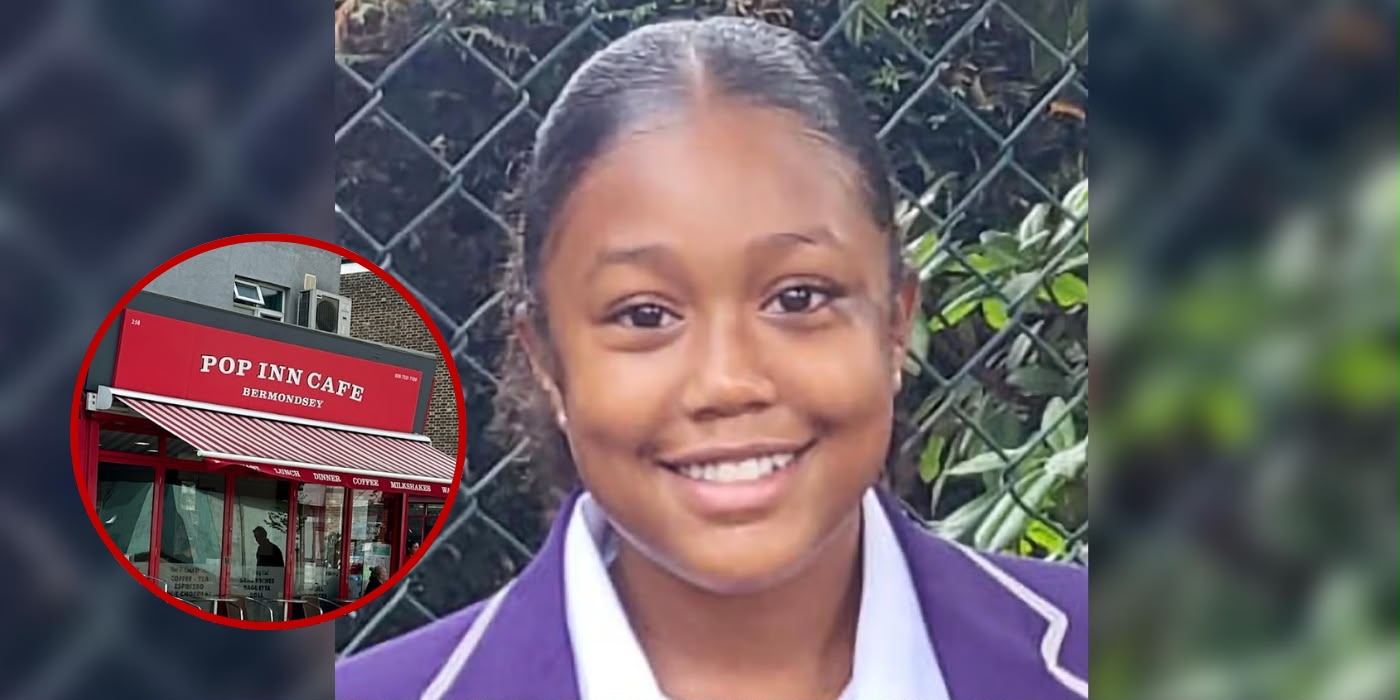

The family of a 12-year-old girl who died after drinking a contaminated milkshake at a south London café are continuing their fight for justice, as an inquest has highlighted serious concerns about how food allergies were managed before her death. Mia Shay St Hilaire, from Sydenham, south-east London, suffered a severe allergic reaction after consuming a Twix milkshake at the Pop Inn Cafe on Southwark Park Road in August 2023.
Mia had a known hazelnut allergy, but the drink she was served had been prepared using a blender that had previously been used to make a Kinder Bueno milkshake containing hazelnuts. Evidence presented during the inquest at London Inner South Coroner’s Court showed that the blender had not been cleaned between preparing the two drinks, allowing hazelnut residue to contaminate Mia’s milkshake.
CCTV footage showed café operator Baris Yucel preparing Mia’s drink without washing the equipment after making the earlier milkshake. Assistant coroner Briony Ballard examined the circumstances surrounding Mia’s death before delivering a narrative conclusion, which confirmed that the contamination had led to a severe allergic reaction.
The coroner said Mia had consumed some of the Twixmilkshake,
“Which had been cross-contaminated with hazelnut residue from a Kinder Bueno milkshake previously prepared in the same unwashed blender.
“She developed rapidly progressing anaphylaxis and later collapsed at her aunt’s home.”
.jpeg)
Anaphylaxis is a severe allergic reaction that can develop rapidly and become life-threatening, affecting breathing and blood pressure and requiring urgent medical treatment. After drinking the milkshake, Mia became seriously unwell and later collapsed while at her aunt’s home. She was taken for emergency medical treatment, with doctors attempting to save her life, but despite extensive treatment and being transferred to intensive care at Evelina London Children’s Hospital, she died.
For Mia’s parents, Adrian and Chanel, the inquest has formed part of a painful process of seeking answers about how their daughter lost her life and what could have been done to prevent it. While the criminal case against the café operator resulted in a conviction, the family are continuing to push for wider changes to food safety procedures, believing that stronger protections could help prevent another child from dying in similar circumstances.
.jpeg)
In a statement following the conclusion of the inquest, Mia’s parents thanked the coroner for examining the circumstances surrounding their daughter’s death and said they hoped the findings would help bring about meaningful improvements. They have also made clear that their campaign is not solely about what happened at one café, but about ensuring that businesses and authorities take the risks associated with food allergies seriously.
The family said:
“We would like to thank the coroner for her careful and thorough investigation into the death of our beautiful daughter, Mia.
“We are grateful for the time and attention given to understanding what happened and for ensuring that Mia’s voice has been heard.
“We are convinced that significant changes are needed toprotect people living with food allergies.
“Consumers rely on food hygiene ratings when deciding where it is safe to eat, but they do not tell us anything about the way a food business runs allergy management systems. There should be a separate, clearly displayed rating dedicated to allergy management, like the food hygiene rating.
“This would mean that people with allergies could make informed choices about where they eat.
“For families living with food allergies, eating out should not mean they are at risk. We hope that lessons will be learned from Mia’s death and that changes will be made to prevent other famlies enduring the devastation that we now have to live with.
“No family should ever have to lose a child in these circumstances. If the local authority had ensured that the cafe’s allergy management responsibilities had been properly understood, and put into practice, we believe Mia would still be alive today.
“We want to make sure that change is Mia’s legacy so that we can help to save lives in the future.
“Mia was, and is, deeply loved and she will never be forgotten.”
.jpeg)
The proposed allergy management rating is central to the family’s campaign. They argue that existing food hygiene ratings do not tell customers enough about whether a business has appropriate procedures in place to prevent allergen contamination, leaving people with severe allergies without a clear way to assess how safely their food and drinks will be prepared.
Their calls also place responsibility on local authorities and regulators to ensure that businesses understand their legal obligations and that appropriate safety procedures are properly implemented and monitored. The family believes that if the café’s allergy management responsibilities had been better understood and followed, Mia’s death could have been prevented.
The criminal case against Yucel had already resulted in legal consequences before the inquest concluded. In January 2025, he pleaded guilty to all six food safety offences brought against him by Southwark Council, including failing to make allergen information available or visible to customers, failing to manage allergen contamination during food preparation, and serving food containing an allergenic ingredient that should not have been present.
Yucel was fined £18,000 and handed a 100-hour community order. The case highlighted how contamination can occur even when an allergenic ingredient is not supposed to be part of the food or drink ordered by a customer, with Mia’s Twix milkshake becoming contaminated because the same blender had previously been used to prepare a drink containing hazelnuts.
Although the guilty pleas and resulting sentence addressed the offences brought against Yucel, Mia’s family are seeking changes that go beyond the outcome of the prosecution. Their campaign is focused on improving the systems that businesses use to manage allergies, as well as the way food safety standards are assessed and communicated to customers.
The case has also prompted wider discussion about staff training, cleaning procedures and whether existing food safety requirements provide sufficient protection for people with allergies. For families whose children have severe allergies, eating outside the home can involve checking ingredients, questioning staff about preparation methods and trying to establish whether equipment could have come into contact with an allergen.
.jpeg)
Mia’s death has therefore renewed calls for businesses to ensure that staff understand the seriousness of food allergies and follow appropriate procedures when preparing orders. Even when a customer chooses something that does not intentionally contain an allergen, traces left behind on equipment can still present a serious risk.
The concerns have resonated with members of the public who have children or family members living with severe allergies. One person, who said their daughter was severely allergic to fish and nuts, described the circumstances surrounding Mia’s death as frightening and expressed sympathy for her family.
They wrote:
“From a mum who’s daughter is severely allergic to fish and nuts, this is so scary. This was so avoidable and I can’t even imagine the pain and loss the family is dealing with. My heart goes out to them. RIP beautiful girl!”
Another person questioned whether they could trust food businesses to safely prepare meals and drinks for customers with serious allergies, expressing concerns about staff experience and the risks of mistakes. They commented:
“How incredibly sad! I am not trusting stores that hire people barely out of their teens to serve my severely allergic child. People can not be trusted at the best of times”
A third person placed the responsibility on the adults working at the café, writing:
“The adults in that café failed her. May she restin peace.”
The reactions reflect the anxiety that incidents involving food allergies can cause for families who depend on restaurants and cafés to follow appropriate safety procedures. For parents of children with severe allergies, the possibility of cross-contamination can make even an ordinary trip to a café feel risky, particularly when they cannot be certain that staff have followed the correct procedures.
Tanya Ednan-Laperouse, founder of Natasha’s Foundation, whose daughter died aged 15 from an allergy to sesame in a Pret baguette, also highlighted the need for improvements across the industry. Her organisation campaigns for greater awareness and stronger protections for people living with food allergies, and she said Mia’s case demonstrated that further work was needed.
She said
“The inquest into Mia’s death illustrates just how far we still have to go to improve awareness, understanding and regulation of food allergies.
“Food allergies are not a preference or a choice; they are a serious, unpredictable medical condition which for some, like Mia, can be fatal.
“Everyone has a responsibility to keep people with food allergies safe – families, schools, workplaces, cafes and restaurants, regulators and government…
“Food allergen regulations should be as important as food hygiene. Yet the current different systems for monitoring food allergen are inadequate.”
They are also calling on the Food Standards Agency and relevant authorities to review the existing framework and consider reforms that could strengthen protections. For the family, the conclusion of the inquest is an important step in understanding what happened, but it does not mark the end of their efforts to secure changes that could prevent similar deaths.
Mia was only 12 when she died, following what bgan as an ordinary visit to a café with her aunt and sister. Her parents continue to live with the loss while campaigning for stronger safeguards , hoping that the circumstances surrounding her death will lead to greater awareness, improved training and more effective enforcement of allergy safety requirements.
.jpeg)
Their fight for justice is therefore not limited to the criminal proceedings that followed Mia’s death. They want the lessons from the inquest to translate into practical changes for families who rely on food businesses to protect them from allergens, so that no other parent has to endure the same devastating loss.
For Adrian and Chanel, ensuring that Mia is remembered means continuing to demand accountability and pressing for reforms that could save lives. They hope that by making allergy management a more visible and enforceable part of food safety, their daughter’s legacy will be one of meaningful change, rather than . another tragedy that could have been avoided.
.png)


.jpeg)
.jpeg)
%20(2).png)
%20(1).png)
.svg)
.svg)
.svg)