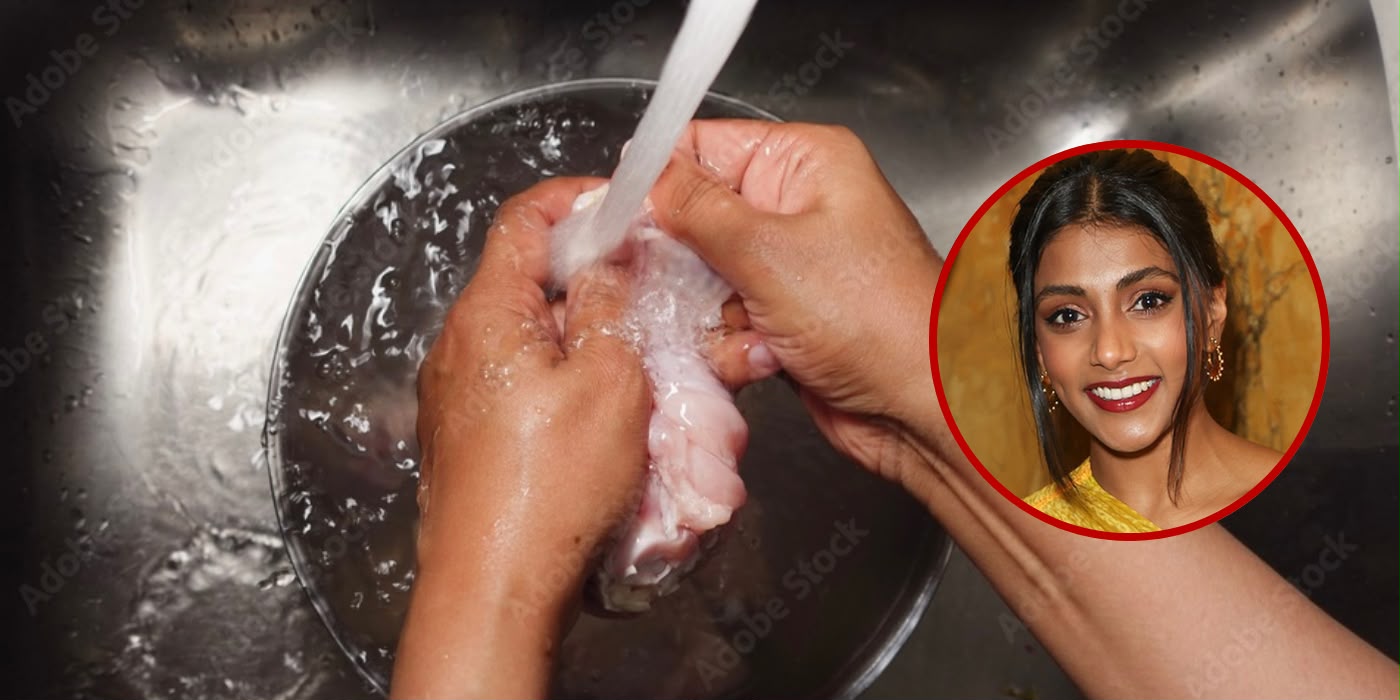

The actress, best known for playing Edwina Sharma in the Netflix period drama Bridgerton, shared her thoughts on the subject in a video posted to TikTok, questioning why people continue to rinse raw chicken before preparing it.
Opening the video with the blunt statement,
“I think washing your chicken is gross”,
Chandran went on to explain why she believes the practice is unnecessary and could potentially put people at risk of foodborne illness.
“No, but real talk, why are people out here washing their chicken?” she asked, before highlighting her concerns about salmonella, a type of bacteria that can cause food poisoning.
“It's like the number one way to contaminate for salmonella,” she said, adding, “No, truly it is, you can google it.”
.jpeg)
Chandran also argued that the smell of raw chicken should be taken seriously, saying,
“And also, if your chicken smells, then it's off and you shouldn't be eating it, ever.”
She went on to explain that cooking chicken properly should kill harmful germs, questioning what washing it beforehand actually achieves.
“And then, if you're cooking it properly, all the germs will be gone,” she said, before asking, “Like, what is the purpose of washing chicken? I don't understand.”
Acknowledging that her approach might differ from what others consider normal kitchen hygiene, she added, “Am I really unhygienic here, by not washing chicken?”
She concluded by reiterating her concerns about food safety, saying,
“I just think I don't want to risk the salmonella.”
Her comments have reignited a familiar debate online, with people divided over whether washing raw chicken is a necessary part of preparing a meal or an unnecessary step that could increase the risk of contamination.
Despite Chandran's concerns, not everyone in the comments agreed with her stance, with several viewers insisting that washing chicken has always been part of their food preparation routine without causing them any problems.
One person pushed back against the actress's warning, writing:
“I’ve washed my chicken my ENTIRE life and not once ever have I had food poisoning from my own kitchen lool!”
.jpeg)
Another questioned the appearance of chicken that has not been rinsed, asking:
“All all them yellow bits on the chicken is visually okay for you to eat?“
A third commenter made their position clear, writing:
“To each their own but me, I wash my chicken! Always!!”
The responses reflect how strongly people feel about the subject, with many treating the way they prepare chicken as something they have learned at home and continued into adulthood.
According to the UK's Food Standards Agency (FSA), raw chicken should not be washed before cooking because rinsing it can splash harmful bacteria onto hands, kitchen worktops, utensils and nearby food. This is known as cross-contamination, which can increase the risk of food poisoning.
It is important to distinguish between the risks of washing chicken and the bacteria already present in raw poultry. Washing does not create salmonella, but water splashing around the sink can spread bacteria from contaminated chicken to other surfaces and foods.
Salmonella is one of the bacteria associated with food poisoning, alongside Campylobacter, which is also commonly found in raw poultry. The FSA's advice is that chicken should be cooked thoroughly, as sufficient heat kills harmful bacteria.
There is also a difference between the prevalence of salmonella in chicken and the risk created by washing it. In one UK survey of retail chicken and turkey, salmonella was detected in 2% of chicken samples tested. This suggests the bacteria was uncommon in that particular sample, but it does not mean the risk is zero or that washing chicken is harmless. The same survey found Campylobacter in 48% of chicken samples.
For those who wash chicken because they believe it needs to be cleaned to remove bacteria, the official guidance is that rinsing is not necessary. Instead, people should handle raw poultry carefully, keep it separate from ready-to-eat foods, wash their hands after handling it and clean any utensils or surfaces that have come into contact with it. Smell is another point raised by Chandran. While an unpleasant smell can be a sign that chicken has spoiled, smell alone cannot establish whether food is safe to eat, as harmful bacteria may be present even when food looks and smells normal.
.jpeg)
Beyond the food safety argument, the debate touches on something more familiar to many people, particularly those raised in African and Caribbean households, where washing chicken before cooking is a common practice.
For some families, rinsing meat is simply part of the preparation process passed down through generations. It can be associated with removing visible residue, excess juices, blood or unwanted bits from the meat before seasoning and cooking it. In some households, the practice is also linked to a broader understanding of cleanliness in the kitchen. People may have watched parents, grandparents and other relatives prepare meat this way for years, making it feel like the natural and correct thing to do.
That does not mean everyone from these backgrounds follows the same method, nor is washing chicken exclusive to African and Caribbean communiies. The practice varies between households, cultures and individuals, with people often relying on what they have been taught at home.
Ultimately, Chandran's video has reopened a debate that many households will recognise. While people may continue to disagree over whether chicken should be washed, the food safety guidance is clear: rinsing raw chicken is unnecessary, and cooking it thoroughly, alongside good kitchen hygiene, is the safer approach.
.png)


.jpeg)
.jpeg)
%20(2).png)
%20(1).png)
.svg)
.svg)
.svg)