
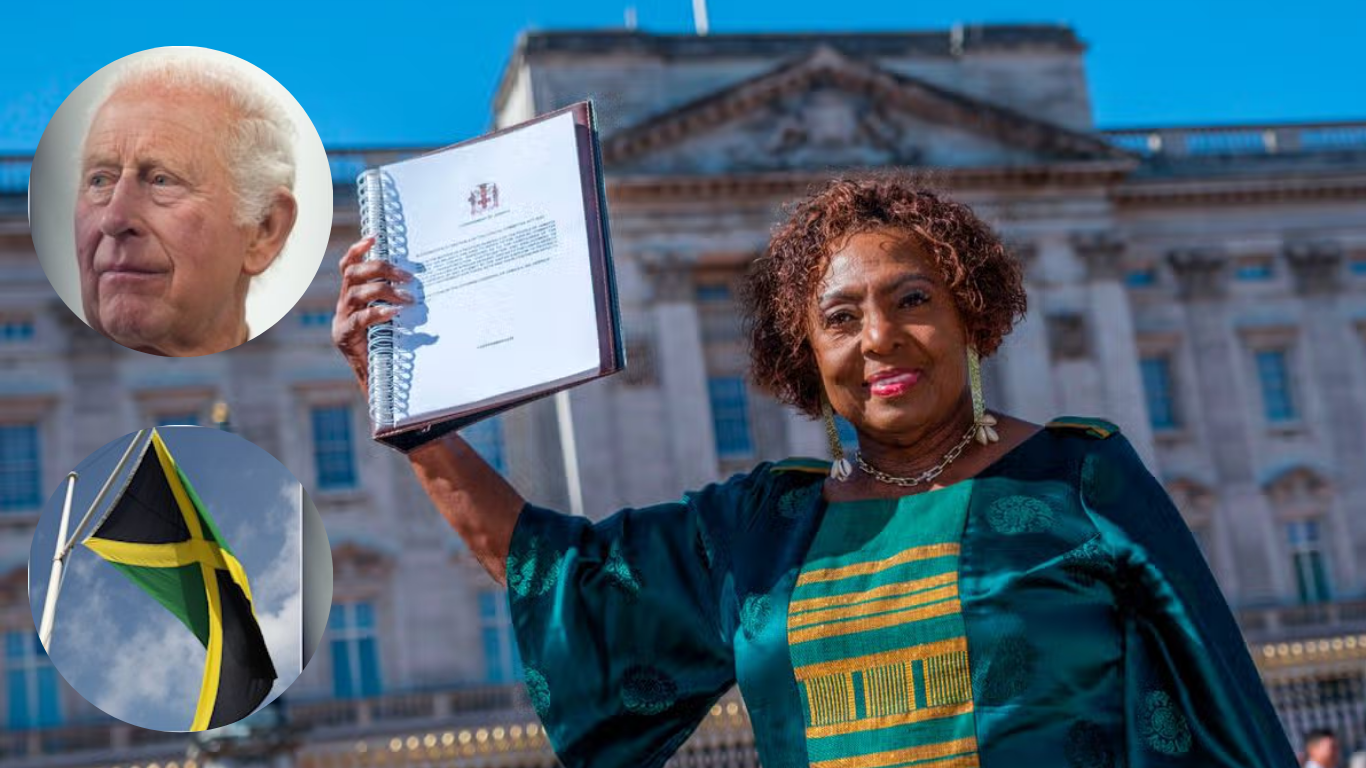

Jamaica is taking its long-running campaign for slavery reparations directly to King Charles, as the Caribbean nation seeks legal clarity over Britain's responsibility for centuries of enslavement and colonial exploitation. The Jamaican government is set to formally submit a petition asking the King, who remains the country's head of state, to refer a series of legal questions to the Judicial Committee of the Privy Council. Officials hope the move could help establish a pathway toward reparations and accountability for the suffering endured by generations of enslaved Africans.
Olivia Grange, Jamaica's Minister of Culture, Gender, Entertainment and Sport, described the petition as a significant step in the country's ongoing pursuit of justice.
She said the effort could help secure a "long outstanding settlement for the hundreds of years of the most horrific abuse that our African ancestors endured."
While King Charles does not personally decide whether such matters are referred to the Privy Council and must act on official advice, Buckingham Palace has reportedly worked alongside Jamaica's Governor General to ensure the petition is submitted through the correct constitutional channels.
A Buckingham Palace spokesperson said:
"His Majesty has on many occasions expressed his personal and wholehearted commitment to promoting greater understanding around the issue of slavery and finding ways to address historic wrongs for the benefit of communities today."
The petition comes amid growing calls across the Caribbean for former colonial powers to address the lasting impact of slavery.
When Britain abolished slavery throughout much of the British Empire in 1833, the government compensated slave owners for the loss of what was legally considered their property. Around £20 million was paid to former slaveholders, with the loans used to finance the compensation scheme only fully repaid by British taxpayers in 2015.
Grange questioned the fairness of a system that compensated enslavers while providing nothing to those who had suffered under slavery.
"Up to 2015, Britain was paying the slave masters, because we were being considered property," she said.
"The question really should be: if in modern times we're still paying back the slave masters for the property that was our people, our ancestors, for property that was because of the abolition of slavery, then why shouldn't we be pursuing some remedy at this time?"
The British government has consistently rejected demands for reparations and has ruled out issuing compensation for Britain's role in the transatlantic slave trade.
During a visit to Jamaica in 2015, former Prime Minister David Cameron acknowledged the horrors of slavery but dismissed calls for financial reparations.
Speaking before Jamaica's Parliament, Cameron said slavery was "abhorrent in all its forms" and expressed hope that both nations could "move on from this painful legacy and continue to build for the future."
The timing of Jamaica's petition is particularly significant, coinciding with the anniversary of one of the most notorious atrocities of the transatlantic slave trade.
In 1781, the Liverpool-registered slave ship Zong departed West Africa carrying hundreds of enslaved Africans bound for Jamaica. During the voyage, crew members threw 132 men, women and children overboard after calculating that an insurance payout for their deaths would be more profitable than selling them upon arrival.
The massacre became a defining moment in the British abolitionist movement and helped fuel growing opposition to the slave trade.
Britain abolished the slave trade in 1807, though slavery itself remained legal across much of the British Empire until 1834.
King Charles has previously spoken publicly about the lasting legacy of slavery. While still Prince of Wales, he described the trade as:
"The appalling atrocity of the slave trade, and the unimaginable suffering it caused, left an indelible stain on the history of our world."
For Jamaican officials, the petition is about more than financial compensation. Grange said the government is seeking legal answers about Britain's obligations and responsibilities regarding slavery and its enduring effects.
Speaking ahead of the petition's submission, she said:
"In relation to the wrongs that were done, we want answers."
She added: "Once we get those answers, then our attorneys, our lawyers, will determine what the next move is."
During the visit, Jamaican representatives are also expected to raise the issue of cultural artefacts removed from the island during the colonial period.
Grange is scheduled to meet with officials from the British Museum as Jamaica continues efforts to secure the return of historically significant objects.
"They are priceless, they are significant to the story of Jamaica and we are working to bring them home," she said.
.png)


%20(1).png)
.png)
.jpeg)
.jpeg)
.svg)
.svg)
.svg)