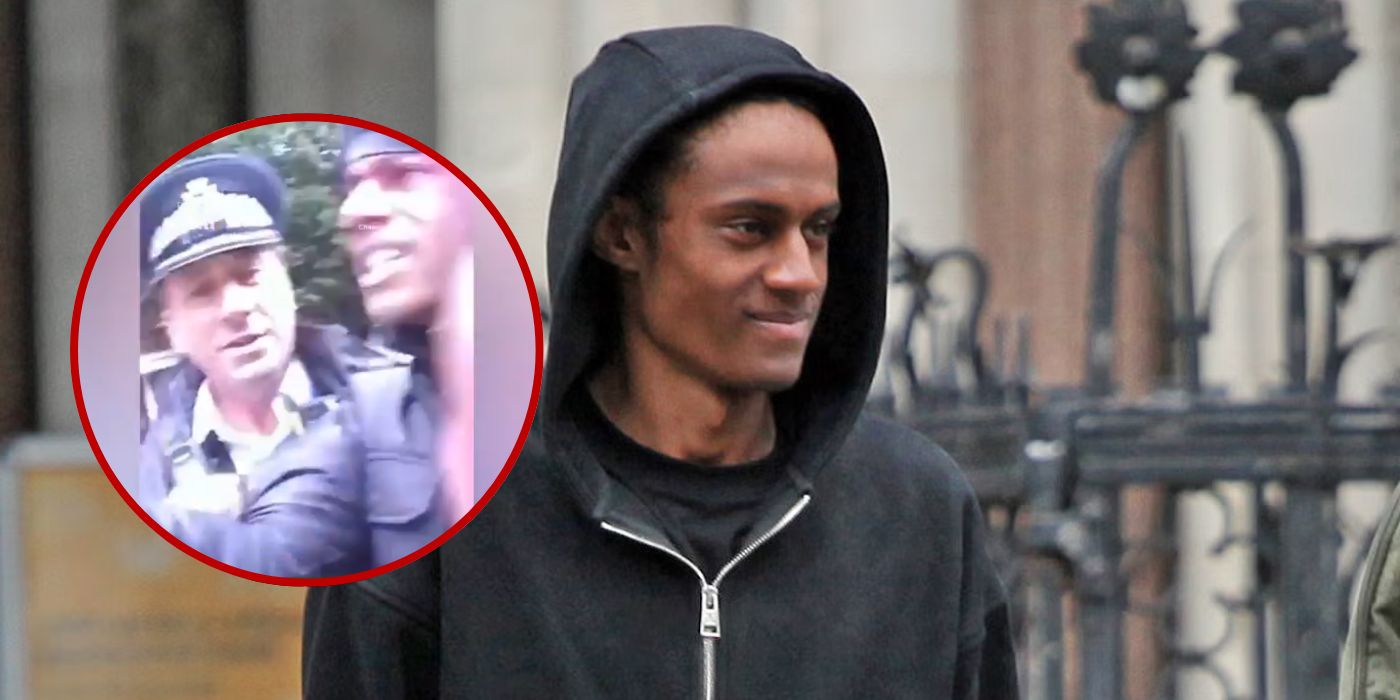

Bodycam footage has shed new light on the traumatic moment teenager Daryl McLune was arrested after finding his mother seriously injured following a suicide attempt, a case that has since resulted in a race discrimination ruling against the Metropolitan Police.
McLune was just 16 years old when officers arrested him in July 2021 on suspicion of attempting to murder his mother, Annette McLune. The teenager had arrived at the scene after receiving a call from his father, only to find his mother critically injured outside their south London home after she had jumped from the building. Despite arriving after police and having no history of offending, he was handcuffed in front of neighbours and taken into custody.
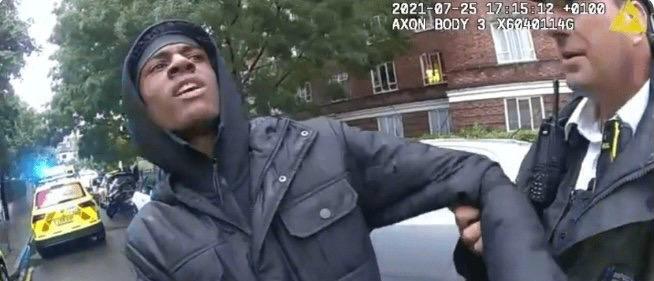
The footage, which was shown as part of the legal proceedings, captures the confusion and distress of a teenager who repeatedly insisted he had done nothing wrong. According to reports from the case, McLune was visibly emotional and struggling to understand why he was being treated as a suspect rather than a child dealing with a family crisis.
The bodycam footage begins with an officer approaching a visibly distressed McLune outside the property as emergency services respond to the incident involving his mother. Attempting to establish his connection to the victim, the officer asks for his name. However, before receiving a clear response, the officer appears to assume his identity and says:
"Tyrone, listen..."
Already overwhelmed by the unfolding situation, McLune immediately corrects him.
"Daryl, don't call me Tyrone!" he responds, clearly frustrated.
The exchange has since attracted significant attention online, with many viewers pointing to the moment as an example of the assumptions and stereotypes that young Black men can face during interactions with police.
As paramedics and officers continue dealing with the incident inside the property, McLune remains outside waiting for information about his mother's condition. However, the situation takes a dramatic turn when officers decide to arrest him on suspicion of attempted murder.
The footage captures McLune's disbelief as he is informed he is being arrested. Fighting back tears and struggling to comprehend what is happening, he repeatedly questions the decision.
"Arrest me for what!!? Why am I getting arrested!? I just told you I wasn't even here! What have I done!?"
His voice can be heard breaking as officers place him under arrest, a moment that would later become central to his legal claim against the Metropolitan Police. Supporters have since argued that the footage shows a frightened teenager dealing with an unimaginable family crisis rather than someone who should have immediately been treated as a suspect.
Recalling the arrest, McLune later said:
"I was confused why I was being arrested for that. There was nothing to suggest I had done anything wrong, so I was just confused.
"I was overwhelmed with emotion, I couldn't understand. Nothing they were saying to me was making sense.
"It was really embarrassing, everyone on my road seeing me in handcuffs."
After being taken to Wandsworth Police Station, McLune was held for 23 hours. The court heard that he remained handcuffed for around five hours while forensic samples were taken from his hands. Those samples were never processed. Throughout his detention, he repeatedly asked for information about his mother's condition but was refused updates because he was being treated as a criminal suspect.
Describing the experience, he said:
"I just felt alone. I didn't have anybody with me. Nobody to stand in my corner. I was just left alone. I had never previously been to a police station in that way.
"Many times I did inquire what was my mum's condition. The information they passed on was that I was a suspect in a crime so they wouldn't tell me what was going on. I didn't know if my mum was alive or dead."
.jpeg)
Less than a week after the arrest, police informed McLune that no further action would be taken. Investigators had discovered a suicide note written by his mother, along with other evidence supporting the conclusion that she had harmed herself. The note reportedly stated: "I am so tired fighting this Covid-19, I have nothing left in me to fight."
The case later reached Central London County Court, where a jury was asked to consider whether McLune had been discriminated against because of his race. After hearing evidence over several days, jurors concluded that he had been treated "less favourably than a non-black boy" would have been when officers decided to arrest and detain him. They also found that police had failed to prove the arresting officer honestly suspected him of attempted murder.
McLune's legal team argued that officers had jumped to conclusions rather than treating him as a frightened child caught up in a family emergency. During the proceedings, his barrister said the teenager had been subjected to the "premature criminalisation of a child in crisis" and suggested unconscious bias may have influenced how quickly officers viewed him as a suspect.
The jury's findings have renewed discussion about longstanding concerns regarding the treatment of Black people, particularly young Black men, within the criminal justice system. Campaigners and community groups have long argued that unconscious bias can affect decisions made by police officers, even when there is no overt racism involved. In McLune's case, jurors specifically concluded that his race played a part in how he was treated.
One moment from the footage and evidence that drew particular attention online involved an officer allegedly referring to the teenager as "Tyrone", despite that not being his name. Critics seized on the incident as an example of stereotyping and assumptions made about Black individuals during police interactions.
Following the verdict, McLune said:
"I am pleased and grateful to the jury for considering my case so carefully and for reaching the decision that they have.
"I have waited a long time for this vindication. And while I will never forget these events, having the jury confirm I should never have been arrested will, I hope, help me to try to move on and recover from this incident."
The Metropolitan Police acknowledged the outcome and said it would consider the jury's findings. A judge will now decide the final level of damages, with McLune seeking compensation of up to £130,000 for the impact the ordeal has had on his life. Lawyers acting on his behalf said the arrest contributed to post-traumatic stress disorder, nightmares and flashbacks, while also affecting his education and future prospects.
The case has prompted strong reactions online, with many people arguing that no amount of compensation could undo what happened. One person commented:
“After watching this footage, £130K compensation is nowhere near enough!!”
Another wrote:
“Hearing his voice breaking is so incredibly sad, JUST seeing his mum at probably her worst is frightening, then calling people who are supposed to help you, but instead arrest you is traumatic. He was a child himself. God protect our young black boys.”
Another wrote:
“Not the police officer assuming his name is ‘Tyrone’. More proof of prejudice from the MET.”
For McLune, the court ruling cannot erase the events of that day or the years that followed. But after being treated as a suspect when he needed support most, the verdict has finally provided official recognition that he should never have been arrested in the first place.
.png)


.jpeg)
.png)
%20(1).png)
.svg)
.svg)
.svg)