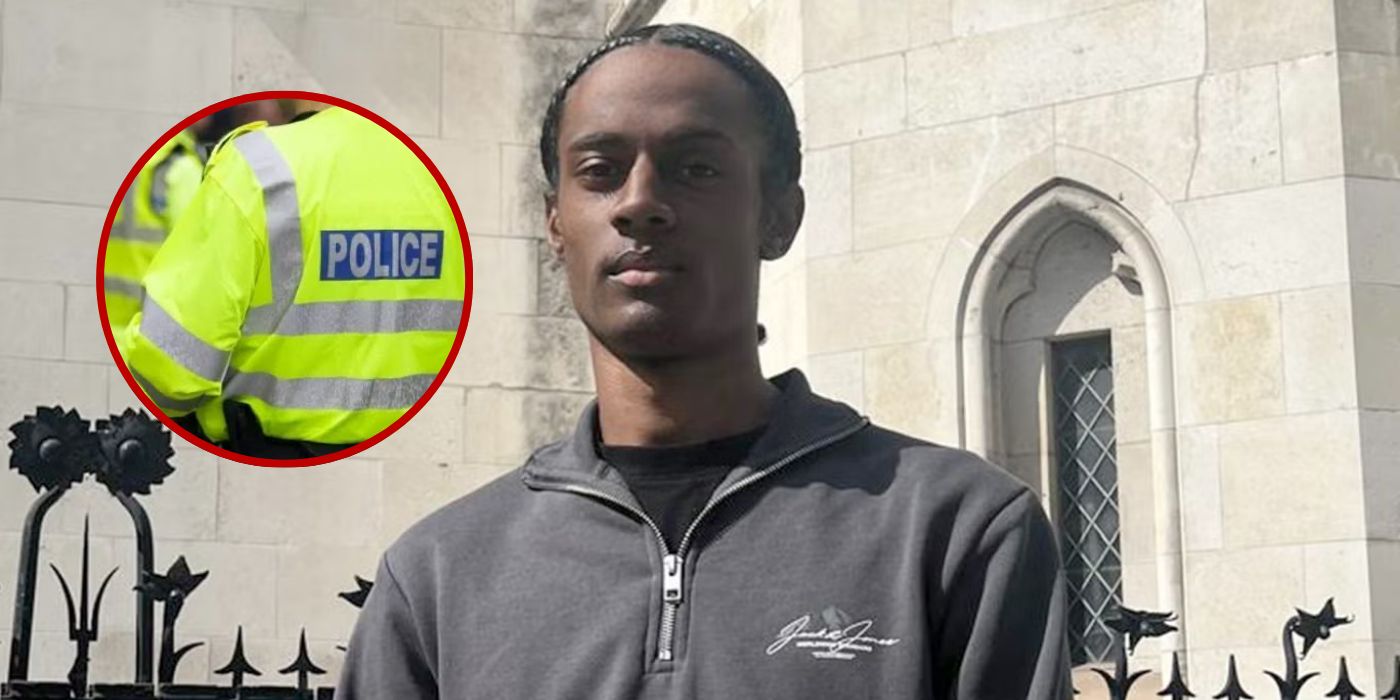

A Black teenager who was wrongly arrested after his mother attempted to take her own life has won a race discrimination claim against the Metropolitan Police, with damages that could reach £130,000 now being considered by a judge.
Daryl McLune was 16 years old when he was arrested in July 2021 on suspicion of attempting to murder his mother, Annette McLune, despite officers later discovering evidence that pointed towards a suicide attempt rather than an attack.
.jpeg)
A jury at Central London County Court found that the Metropolitan Police had discriminated against McLune because he was Black and concluded that he had been treated less favourably than a non-Black teenager would have been in the same circumstances. The jury also found that police failed to prove that the arresting officer honestly suspected the teenager of attempted murder.
The case focused on events that unfolded on 25 July 2021. McLune had returned home after receiving a call from his father, Travayne, only to find his mother lying on the ground outside their family home in London after she had attempted to take her own life.
Despite the traumatic circumstances, officers arrested the teenager at the scene and took him to Wandsworth Police Station, where he remained in custody for 23 hours. The court heard that he was kept in handcuffs for five hours while police obtained forensic samples from his hands. Those samples were never processed or submitted.
.jpeg)
During the trial, police argued that blood found inside the family flat had led officers to view the incident as suspicious. However, the court heard that officers were unaware at the time of other evidence, including bloody razor blades and a suicide note, both of which were later discovered.
After hearing seven days of evidence, the jury answered 19 factual questions relating to the case. Jurors found it had been proven that McLune was treated "less favourably than a non-black boy" would have been when police decided both to arrest him and to continue detaining him for such a lengthy period.
The jury also determined that the force had failed to show that the arresting officer "honestly suspected" McLune had committed attempted murder. Jurors further concluded that the Metropolitan Police had not demonstrated it was "reasonable and necessary" to keep him handcuffed until forensic samples had been taken.
Although jurors stopped short of finding that excessive force had been used during the handcuffing, they concluded that the overall treatment of the teenager amounted to a breach of his rights under the European Convention on Human Rights, specifically the right not to be subjected to "inhuman or degrading treatment".
McLune, who had previously been described in court as a diligent student with no prior contact with police, said the experience had a lasting impact on his life. Following his arrest, he dropped out of school and has since suffered from post-traumatic stress disorder, nightmares and flashbacks, according to evidence presented by his legal team.
Following the verdict, McLune said:
"I am pleased and grateful to the jury for considering my case so carefully and for reaching the decision that they have.
"I have waited a long time for this vindication. And while I will never forget these events, having the jury confirm I should never have been arrested will, I hope, help me to try to move on and recover from this incident."
His lawyers from Bhatt Murphy Solicitors argued that the ordeal had fundamentally altered the course of his life and are seeking compensation of approximately £130,000. The final amount, if awarded, will be determined by Judge Andrew Holmes at a later hearing.
.jpeg)
Responding to the outcome, the Metropolitan Police acknowledged the jury's findings and said:
"We are aware of the findings of a jury in a civil trial relating to the arrest and detention of a boy in July 2021.
"We acknowledge how distressing it was for the boy to have been arrested in these tragic circumstances.
"The Met is committed to tackling all forms of discrimination, including unconscious bias. We know cases like this damage the trust communities have in us and we will be considering the outcome carefully."
The case has renewed scrutiny over the Metropolitan Police's handling of race discrimination complaints and the treatment of young people during criminal investigations. For McLune, however, the verdict marks the end of a years-long battle for recognition that he should never have been treated as a suspect while dealing with one of the most traumatic moments of his life.
.png)


.jpeg)
.png)
%20(1).png)
.svg)
.svg)
.svg)