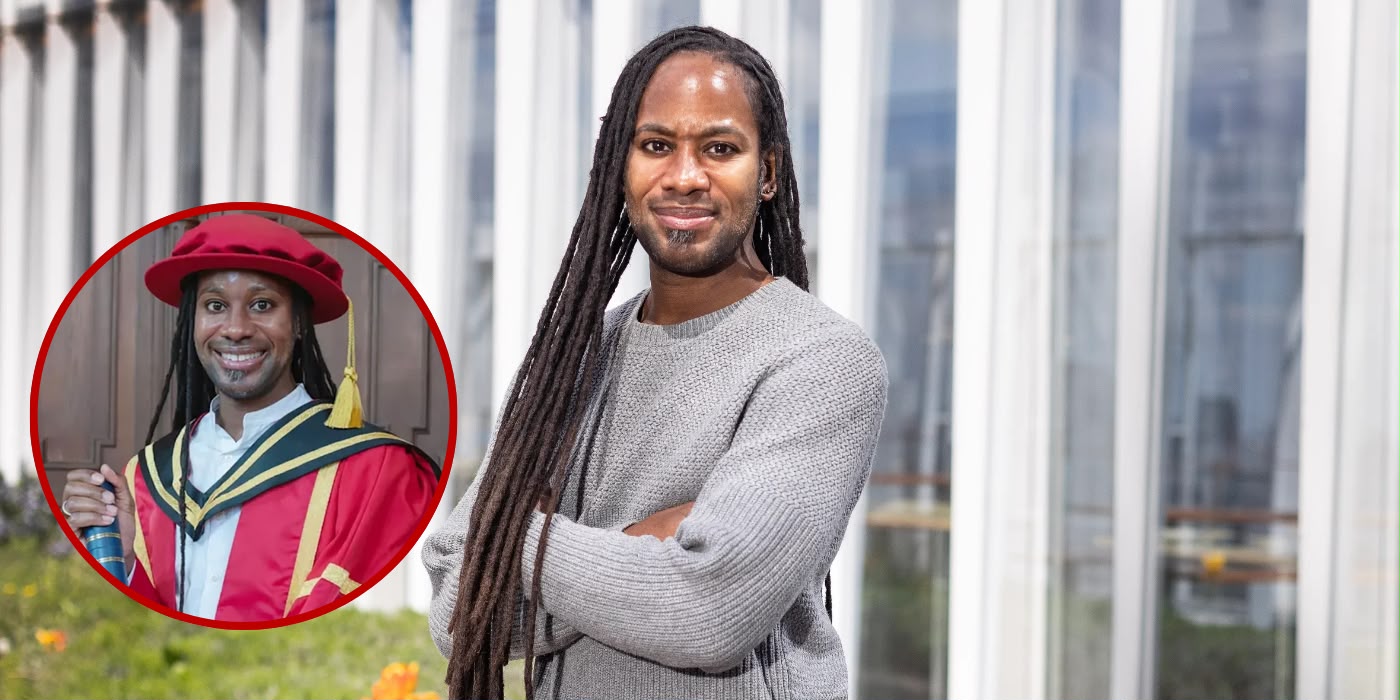

Fresh allegations from former students have added another layer to the growing controversy surrounding former University of Cambridge professor Jason Arday, with students reportedly questioning the quality of his teaching and the level of supervision they received.
According to accounts given to The Telegraph, former Cambridge students complained about receiving what they considered to be limited supervision from Arday, with some claiming they were reassured that their work was strong before later receiving grades lower than they had expected.
The accounts have emerged days after Arday resigned from his position at Cambridge amid renewed scrutiny of his academic record.
The latest claims have also reignited debate over whether concerns about Arday’s professional conduct are being fairly examined, or whether the coverage surrounding him has developed into something broader and more personal.
.jpeg)
One former student reportedly told The Telegraph that they had struggled to arrange meetings with Arday during their studies.
The student said they had only one meeting with him despite attempting to arrange further supervision. They reportedly received positive comments about their work and were told they were performing at a high level, before ultimately receiving a grade that was lower than they had anticipated.
The student subsequently challenged the result, arguing that a lack of supervision had affected their academic performance. Their appeal was reportedly unsuccessful.
Other students have similarly raised concerns about their experiences of being taught or supervised by Arday.
One student reportedly requested a change of supervisor after becoming dissatisfied with the support they were receiving. The student said they were accused of racism after raising their concerns.
However, it is important to distinguish this account from an allegation that Arday himself made the accusation. The reporting does not establish that the accusation came directly from Arday.
Another student reportedly complained about the standard of teaching they received and raised concerns about the amount of time spent in scheduled sessions.
The accounts are significant because they concern students who say they attempted to raise issues while Arday was working in academia, rather than criticisms that have emerged solely as a result of the current controversy.
However, the allegations remain accounts from individual former students and are not findings that have been independently established against Arday.
The latest allegations are not the first accounts from students questioning Arday’s teaching.
A former student who said they were taught by Arday at the University of Roehampton in 2018 described their experience in a lengthy account shared online. The student alleged that Arday regularly arrived late or left early and claimed that, on one occasion, a four-hour teaching session lasted approximately one hour. They also alleged that much of the teaching relied heavily on Arday’s own experiences and opinions rather than academic literature and theories relevant to the course.
The student said they eventually complained to the head of their course, who they claimed observed one of Arday’s lectures and agreed with their concerns about his teaching.
The student said they were subsequently awarded 70% for an essay, a mark they considered good in isolation, but lower than their own average for the year.
They claimed they requested a meeting to discuss the mark and ask for feedback, and alleged that during the conversation Arday suggested their dissatisfaction was connected to “white privilege”.
These claims have not been independently verified and should be treated as the student’s account of events.
They nevertheless provide context for the latest allegations from former Cambridge students, who have now raised similar concerns about supervision and academic outcomes.
The controversy represents a dramatic reversal for Arday, whose appointment at Cambridge in 2023 was initially celebrated as a major milestone.
At 37, he was announced as the youngest Black professor ever appointed at the university.
Cambridge’s own announcement highlighted an extraordinary personal and academic journey. The university said Arday had been diagnosed with autism at the age of three, remained non-verbal until he was 11 and did not learn to read or write until he was 18.
Despite those difficulties, he went on to complete university degrees before earning a PhD in education from Liverpool John Moores University.
His academic career included positions at Durham University and the University of Glasgow, where he became Professor of Sociology of Education in 2021. His research focused heavily on race, inequality, education and the experiences of Black students and academics. His Cambridge appointment was therefore seen by many as symbolic as well as academic.
.jpeg)
Arday had spent much of his career researching racial inequality within higher education and arguing for greater representation of Black academics.
His appointment also came at a time when Cambridge was facing longstanding criticism over the lack of racial diversity among its senior academic staff.
The latest student allegations come against the backdrop of a much wider dispute over Arday’s academic record.
Questions surrounding his work intensified after allegations that passages of his PhD thesis were substantially similar to material contained in an earlier thesis by another academic.
An analysis reported in July identified numerous passages in Arday’s doctoral thesis that were identical or highly similar to work produced by Paula Zwozdiak-Myers, who completed her own thesis years earlier.
Retraction Watch subsequently reported that Times Higher Education had been preparing a story about alleged plagiarism in Arday’s thesis and journal articles in 2025, but that the publication did not proceed with the story after Arday’s lawyers intervened.
The controversy intensified as further questions were raised about aspects of Arday’s professional and personal claims, including accounts of endurance running and charitable fundraising.
The Times reported that some of his claims about long-distance running and fundraising had been difficult to verify, with certain figures subsequently being changed or removed from online biographies. Arday has rejected the portrayal of himself as a fraud or fantasist. He has acknowledged making mistakes in his academic work but has denied deliberately fabricating his achievements. In comments reported by The Times, he said he was accountable for mistakes but stated: “what I am not is a liar.”
As the controversy grew, questions were also raised about the role race and disability may have played in the reaction to Arday.
Arday has argued that he has been subjected to racially motivated scrutiny and has previously spoken about the discrimination he believes he has experienced throughout his career.
Supporters have similarly argued that the intensity of the coverage cannot be separated from the fact that Arday is a Black academic whose career has frequently been discussed through the lens of race, representation and diversity.
His resignation statement said the “personal cost” of the scrutiny had become too great and that he no longer wanted to live under a constant spotlight. He also made clear that his resignation should not be interpreted as an acceptance of the narratives that had developed around him.
The latest developments have divided public opinion.
Some people believe the continued scrutiny is justified, arguing that allegations concerning academic integrity and the quality of teaching should be examined regardless of who is involved.
Others believe the story has moved beyond legitimate questions about academic work and into a wider examination of Arday’s personal history.
That view has been reflected in comments circulating online, with some people describing the coverage as a “witch-hunt” and arguing that the media has moved away from the original plagiarism allegations.
One commenter wrote:
“From plagiarism, the media has swiftly moved on to talking about his personal adventures that have nothing to do with his job as a lecturer or the initial accusation. It’s a witch-hunt.”
Another wrote:
“They’re out to get him at this point. By any means necessary.”
Other commenters have taken the opposite position, arguing that the scale of the allegations makes continued scrutiny appropriate.
One person questioned why anyone was defending Arday and accused him of being a “compulsive liar”, while another sarcastically suggested testing his academic knowledge by asking him to deliver a lecture to fellow professors.
Those comments are examples of public reaction rather than evidence of wrongdoing and should not be treated as established facts.
The question of whether the scrutiny has become excessive has also moved beyond social media.
Nearly 100 senior Cambridge academics have called for an independent investigation into Arday’s appointment and the university’s handling of the controversy.
The academics have criticised the way Cambridge promoted Arday’s appointment and raised concerns about the wider consequences of the controversy for Black academics and the study of race.
Priyamvada Gopal, a professor at Cambridge and one of those involved in the letter, said an independent investigation should examine “what both the faculty of education and university management may have got very badly wrong.” She also warned about what she described as the “grotesque racism” unleashed by the controversy and its impact on Black academics and the field of critical race studies.
Other Black academics have similarly argued that the response to Arday’s alleged failings should be considered within the wider history of racial inequality in British academia.
A Guardian report published on Saturday described the controversy as prompting a wider debate among Black academics about whether Black scholars face a different level of scrutiny when they make mistakes or become embroiled in allegations of misconduct.
That does not mean allegations concerning Arday’s academic work should be dismissed because of his race. Rather, it has raised a separate question: can concerns about academic standards be investigated rigorously without allowing the discussion to become racialised or abusive?
Cambridge has now announced that it will review the procedures surrounding the appointment of senior academics. The university’s decision followed Arday’s resignation and the emergence of further questions about his academic qualifications and professional record.
The University of Glasgow, where Arday previously worked, has also announced a review of his appointment.
.jpeg)
The Cambridge review is particularly significant because Arday’s appointment was made through an independent panel of nine electors. The panel was chaired by Baroness Morgan of Huyton, and members of the panel have so far faced questions over how Arday’s credentials were assessed. The university’s handling of the allegations has itself become part of the controversy.
Some academics believe Cambridge should have acted sooner, while others have criticised the institution for allowing the situation to develop into a public spectacle.
For the former students now speaking publicly, the controversy raises a different issue from the questions surrounding Arday’s academic credentials. Their concern is what they believe happened to them as students.
If students genuinely received inadequate supervision, were unable to access the support they expected and subsequently received grades they believed did not reflect their work, they may reasonably want those decisions examined. The question is particularly important where students believe that their academic performance may have been affected by the quality of supervision they received.
However, it would be premature to conclude that any lower grades were caused by inadequate supervision or that students were deliberately marked down because they complained.
There is currently no independent finding establishing that this happened.
That distinction matters because a lower grade does not, by itself, demonstrate unfair marking. Likewise, a student’s dissatisfaction with supervision does not automatically mean that a university’s academic assessment was improper. What the latest allegations do establish is that former students are now asking questions about their experiences and, in some cases, whether their grades should be reviewed.
Arday’s resignation may have ended his tenure at Cambridge, but it has not ended the questions surrounding his appointment.
Instead, the controversy has expanded from allegations concerning academic work to questions about university recruitment, student experiences, institutional accountability, race and the treatment of Black academics.
For critics, the latest student accounts provide another reason to examine whether concerns about Arday’s professional performance were adequately addressed during his career. For his supporters, the continued focus risks turning a legitimate discussion about academic standards into a personal campaign against a Black scholar who has already faced intense public scrutiny.
.jpeg)
And for the students now coming forward, the central issue is more straightforward: whether they received the teaching, supervision and academic assessment they were entitled to expect.
Until the relevant universities complete their reviews, it remains important to distinguish between allegations, individual accounts and established findings.
What is clear is that the controversy surrounding Jason Arday is no longer limited to questions about his academic record. It has become a wider debate about how universities recruit, how students are supported, how allegations are investigated, and where legitimate accountability ends and disproportionate public scrutiny begins.
.png)


.jpeg)
.png)
.png)
.svg)
.svg)
.svg)