
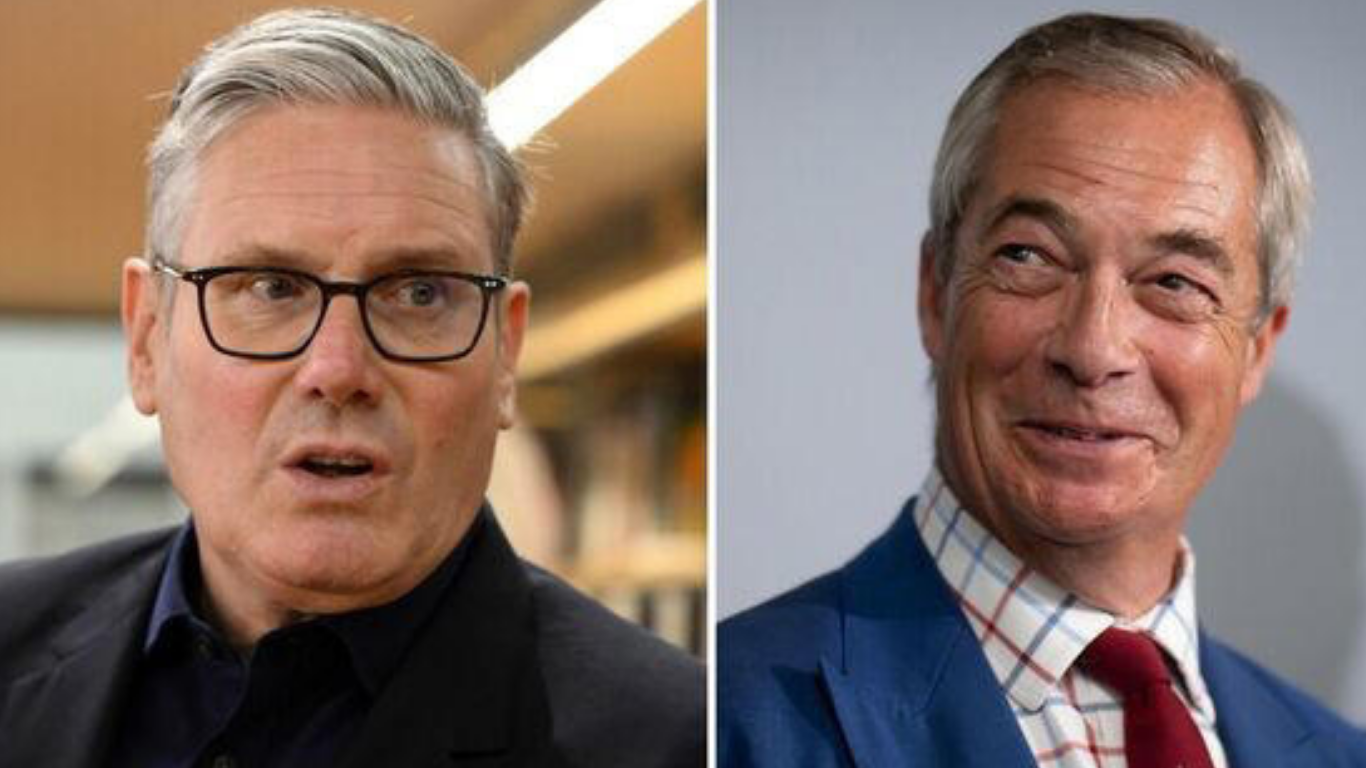

Reform UK has emerged as one of the biggest winners in England’s local elections, delivering a major blow to both the governing Labour Party and the opposition Conservative Party in what analysts are calling a dramatic shake-up of British politics. Led by Nigel Farage, the right-wing populist party gained more than 600 council seats as results continued to come in across England on Friday.
The surge came at the expense of Labour, which lost more than 450 seats, while the Conservatives surrendered nearly 300 seats in another crushing electoral setback.
The results have intensified scrutiny on Prime Minister Keir Starmer, whose Labour government swept to power in the 2024 general election but is now facing mounting frustration from voters less than two years later.
Addressing supporters after the early results, Starmer admitted the outcome was disappointing and acknowledged growing public dissatisfaction with his government’s performance.
“It’s important not to sugarcoat these results,” Starmer said. “Voters are clearly not satisfied with the pace of change.”
Despite the setbacks, the prime minister dismissed any suggestion he would step down from office.
“I’m not going to walk away and plunge the country into chaos,” he said. “We were elected to deal with these challenges, and that’s what we will do.”
While Labour struggled in several of its traditional strongholds in northern England, Farage celebrated Reform UK’s expanding influence, including the party’s first council victory in outer London after taking control in Havering.

“What’s happened is a truly historic shift in British politics,” Farage declared. “It’s a big, big day — not just for our party, but for a complete reshaping of British politics in every way.”
Farage argued that Reform UK has now evolved beyond being viewed as a protest movement, insisting the party has become a legitimate national political force capable of challenging Britain’s long-established political order.
“We are no longer a fluke or a protest vote,” he said. “We are a truly national party, and we are here to stay.”
The election results further highlighted the fragmentation of Britain’s once-dominant two-party system. For decades, Labour and the Conservatives controlled the vast majority of British politics, but both parties are now losing support to smaller movements across the political spectrum.
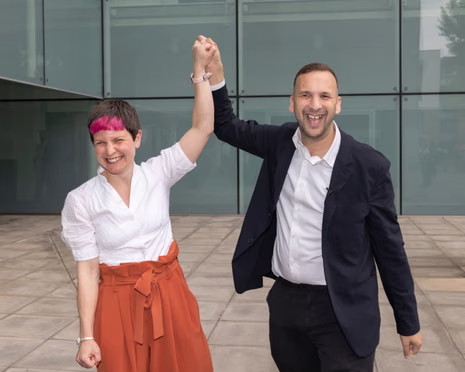
Alongside Reform UK’s rise on the right, the Green Party of England and Wales also made notable gains, particularly in urban areas. The Greens, now led by Zack Polanski, have expanded their platform beyond environmental issues by promoting progressive economic policies and criticising Labour’s stance on issues including Palestinian rights.
One of the party’s most significant victories came in the London borough of Hackney, where Zoe Garbett became the Greens’ first elected mayor in the area after defeating the Labour incumbent.
In her victory speech, Garbett said voters across the country were searching for alternatives to the current government.
“These results show people are desperate for an alternative to this failing Labour government,” she said.
Political analysts say Labour’s losses have come from both directions — with progressive voters drifting toward the Greens while many traditional working-class voters have shifted to Reform UK. Meanwhile, Conservative support has also been eroded as right-leaning voters increasingly back Farage’s party.
One of Reform UK’s most symbolic victories came in Essex, where the party seized control of the county council after more than two decades of Conservative leadership.
.png)


.png)
.png)
.png)
.svg)
.svg)
.svg)