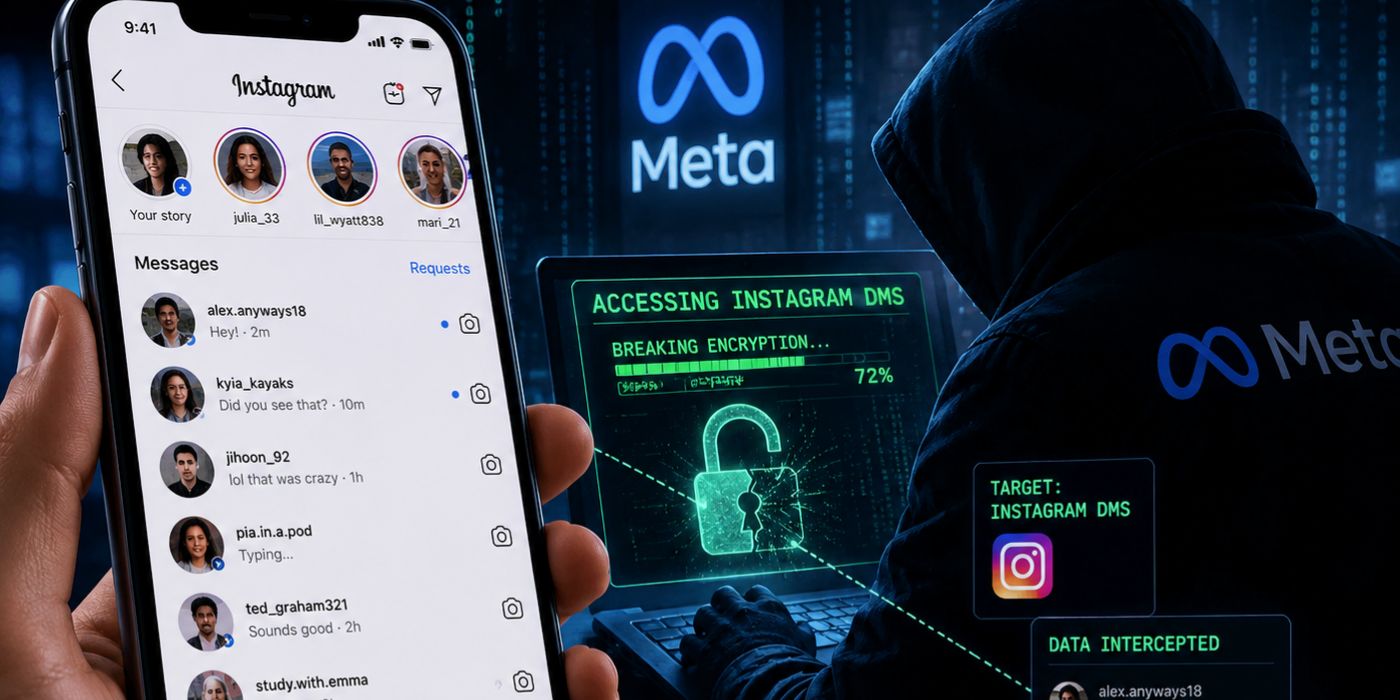

Instagram has quietly discontinued support for end-to-end encryption on direct messages, a significant shift away from its earlier commitment to private messaging. The company confirmed that from 8 May 2026 the feature will no longer be available to users, meaning that messages sent via Instagram’s direct messaging system can now be accessed by Meta and potentially by other parties, including internet service providers if required.
End-to-end encryption was introduced as an optional privacy feature, ensuring that only the sender and recipient could view the contents of messages, photos, videos and voice notes. However, Meta has said the option will be retired because “very few people were opting in to end-to-end encrypted messaging in DMs”, according to a spokesperson describing the reasoning behind the decision.
Meta has also suggested that users who want encrypted messaging can continue to use other platforms such as WhatsApp, which retains end-to-end encryption by default, but critics say this does not address privacy concerns on Instagram itself. Under the new arrangement, messages will revert to standard encryption, meaning they are protected in transit but can be decrypted and read on Meta’s servers if needed.
.jpeg)
The removal of the encryption option has sparked worry among privacy advocates and regular users alike. Security experts argue that end-to-end encryption is a critical safeguard in protecting private conversations from unauthorised access, and that its removal undermines trust in the platform’s privacy commitments. Others point out that although the feature was opt-in, its removal still represents a rollback on user control over personal data.
Many users took to social media to express their frustration. One user said,
“Can't even share a funny reel in peace now.”
Another commented,
“Let's be real people: Instagram, Facebook and WhatsApp can always read your messages when they want to. They haven't always told you, but they can do so at any time.”
.jpeg)
Some experts have defended the move, saying that standard encryption still offers protection from most outside threats, and that Instagram’s priorities include content moderation and child safety concerns where companies argue access to messages can help detect harmful behaviour. Critics, however, say those aims can be pursued without dismantling private communication safeguards.
The change has also revived discussion about how social media companies handle user data and where responsibility lies in balancing privacy with platform safety. With the new approach to Instagram direct messages now in effect, users are being urged to consider alternative messaging platforms if privacy remains a top priority.
.png)


.jpeg)
.png)
.png)
.svg)
.svg)
.svg)