

Teachers trained in Ghana and Nigeria can no longer use the UK’s direct application service to obtain Qualified Teacher Status in England, following changes introduced by the Department for Education.
The new eligibility rules came into effect on September 9, 2026, and also removed India from the countries covered by the “Apply for QTS in England” service.
Qualified Teacher Status, commonly known as QTS, is the professional teaching status used in England and is required or recognised by many schools when employing teachers.
The change means teachers who trained in Ghana or Nigeria can no longer have their overseas teaching qualifications assessed through the direct service in the same way as applicants from eligible countries.
However, the move does not amount to a complete ban on Ghanaian or Nigerian teachers working in England, with the Department for Education confirming that alternative routes into the profession remain available.
The Department for Education said it had updated the eligibility requirements for countries included in the overseas-trained teacher service.
Under the revised requirements, countries must have a national regulator capable of confirming a teacher’s professional standing and must be able to provide references that meet the department’s verification requirements. The department gave a different reason for India’s removal, stating that it does not have a national regulator capable of confirming teachers’ professional standing.
For Ghana and Nigeria, the DfE specifically pointed to concerns surrounding the employment references submitted as part of applications. The department said:
“Our data shows that more than 70% of applications from teachers in Ghana and Nigeria include work history references that use public email addresses, such as Gmail or Hotmail, rather than a school’s official email domain.”
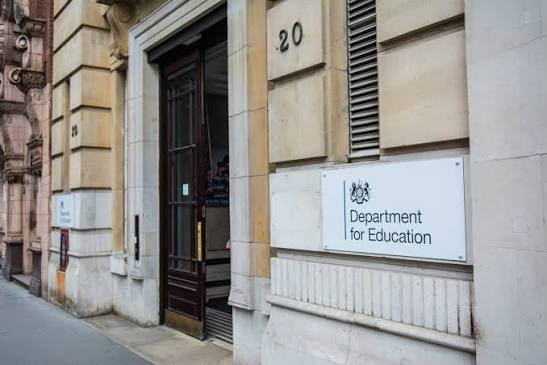
According to the DfE, this meant assessors had to spend additional time and resources attempting to verify information included in applications.
The department said the changes were intended to ensure that information provided by applicants could be reliably verified and that teachers awarded QTS had the necessary skills and experience to teach in English schools.
The change is significant because teachers from both Ghana and Nigeria had made thousands of applications through the route.
Department for Education figures covering the 2024/25 academic year show that 1,076 applications were submitted by teachers trained in Nigeria. Of those applications, 364 resulted in QTS being awarded, while 599 were declined.
Ghana recorded a similarly high number of applications during the same period, with 1,067 applications submitted. Of those, 196 resulted in QTS being awarded, while 749 applications were declined. The figures provide an indication of how many teachers from the two countries had been attempting to use the direct route before the latest eligibility changes were introduced.

The removal therefore affects a route that had been used by a substantial number of teachers seeking recognition of their existing qualifications and experience in England.
The updated rules specifically concern the “Apply for QTS in England” service, meaning teachers trained in Ghana and Nigeria can no longer use that particular route.
The Department for Education has stressed that teachers who are no longer eligible for the direct service can explore other routes into teaching. These include assessment-only QTS, teacher training in England and International Qualified Teacher Status, also known as iQTS.
The assessment-only route can allow experienced teachers to work towards QTS without completing a traditional teacher training programme, provided they meet the relevant eligibility requirements.
Teachers may also pursue teacher training in England, although the requirements will depend on their individual circumstances, qualifications and the training programme they apply for. International Qualified Teacher Status is another option for some overseas-trained teachers. The qualification is designed for teachers working outside England and can provide a route towards gaining QTS while continuing to teach internationally, subject to the relevant requirements.

The government has also stated that some qualified teachers from outside the UK can teach in England without immediately holding QTS, under specific circumstances and subject to the rules that apply to their employment.
This means the September change closes one direct recognition route, rather than preventing teachers from Ghana or Nigeria from pursuing teaching careers in England altogether.
Following the changes, teachers who trained in a number of countries and regions remain eligible to apply through the direct QTS service, provided they meet the other requirements.
These include Australia, Canada, the European Economic Area, Guernsey, Hong Kong, Jersey, New Zealand, Switzerland, Ukraine and the United States. Teachers trained in Jamaica, Singapore and South Africa can also be eligible, although additional conditions apply to applicants from those countries.
The requirements can include restrictions around the subjects applicants are qualified to teach, the age groups they are trained to work with and whether they are already employed in a qualifying teaching role in England.
The updated guidance means that South Africa is currently the only African country listed among those able to use the general overseas QTS application route, although its applicants remain subject to additional conditions.
The announcement has prompted criticism online, particularly from people who have personal experience of being taught by Ghanaian and Nigerian teachers. One person wrote:
“This is a huge loss. Teachers from these countries are the most knowledgeable, principled, and dedicated to their profession. Another example of why the UK is currently in the bin.”
Another person commented:
“Sorry what!? Some of my best teachers were Ghanaian and Nigerian.”
The comments reflect concerns among some members of the public about the impact the decision could have on teachers from both countries who had been hoping to continue their careers in England. However, the reason given by the Department for Education relates specifically to the verification of qualifications, professional standing and employment references, rather than an assessment of the ability or commitment of Ghanaian and Nigerian teachers as a group.
The DfE said it needs to be confident that information submitted by applicants is genuine and can be properly verified before awarding QTS through the direct service.
For teachers who had planned to apply through the direct QTS service, the change means they will now need to consider whether another route is appropriate for their qualifications and circumstances.
The specific route available will depend on factors including a teacher’s existing qualifications, teaching experience, professional status and where they are currently working. The Department for Education has not said that Ghanaian or Nigerian teachers are prohibited from teaching in England, and schools remain responsible for employing teachers. Instead, the policy change concerns the government’s direct overseas qualification recognition service.
The new rules come after the publication of data showing significant numbers of applications from Ghana and Nigeria, alongside the department’s concerns about how employment references were being submitted and verified.
For Ghanaian and Nigerian teachers hoping to work in England, the immediate impact is therefore the loss of a direct application route, with alternative pathways now becoming more important for those seeking QTS.
The Department for Education’s updated guidance confirms that the eligibility change took effect on September 9, meaning applications made after that date are subject to the new rules.
.png)



.jpeg)
%20(1).png)
.jpeg)
.svg)
.svg)
.svg)