%2019.png)

A recent post from The Shade Borough featuring influencer Tawana discussing her past involvement in escort work has ignited a wave of mixed reactions across social media. In the video, Tawana speaks openly about her experiences, what led her into the industry, and how she now reflects on that chapter of her life.
This conversation around Tawana originally stemmed from a separate incident in Central London involving a fight between two women who were reportedly known within online circles for engaging in the same line of work Tawana spoke about. The discussion quickly spiralled across social media, eventually leading back to Tawana’s own comments causing debate around her openness about it.
In the clip shared on our platform, Tawana speaks openly about her past experience working as an escort. Rather than dodging the subject or dressing it up, she addresses it directly, framing it as a previous chapter of her life that she has since moved on from. Her message is rooted in ownership and reflection. She acknowledges her past, but also pushes back against the idea that it should define her entire identity. As she puts it in the comments: “I just tell the truth in a world full of lies. Everyone has a past.”

That honesty is exactly what has split the internet down the middle.
On one side, there are users who see her transparency as refreshing. In an online world where curated perfection is the norm, some viewers have praised her willingness to speak without filters. Others, however, question whether certain parts of life should be shared so publicly at all, particularly when digital permanence means those moments rarely stay “in the past”.
Then there is a broader cultural layer to the reaction, one that becomes even clearer when you compare how the UK and US tend to respond to stories like this.
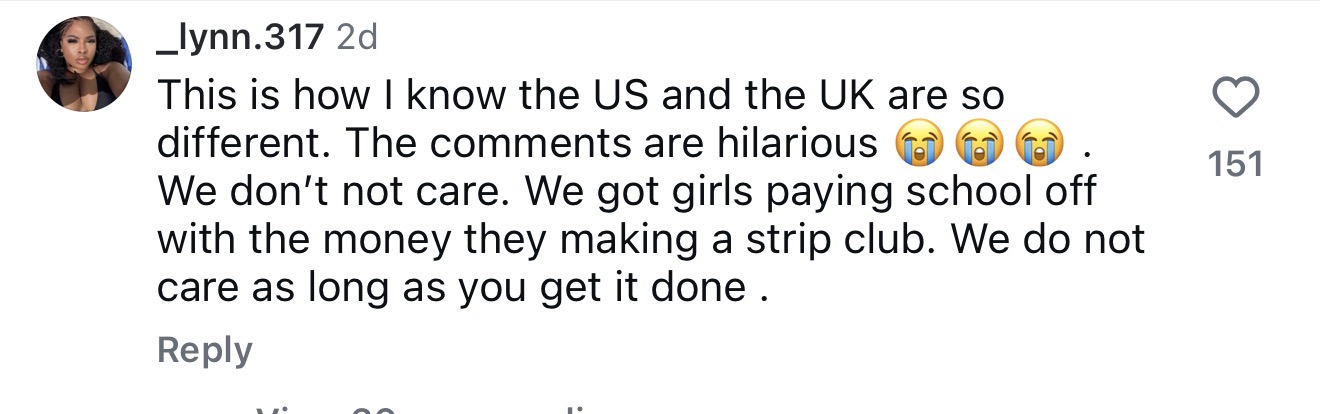
In the UK, the tone is often more restrained on the surface but sharper underneath. There is a strong undercurrent of irony, judgement disguised as humour, and a tendency to moralise while still engaging heavily with the content. British online commentary often swings between detached sarcasm and quiet social policing, with reputation and “what it looks like” carrying a heavy weight even in progressive debates.
In the US, the framing tends to be more openly polarised. American discourse is more likely to split into clear camps of empowerment versus condemnation, with a stronger emphasis on individual agency, reinvention, and the ability to monetise or reframe one’s past. Where UK reactions often circle around social consequences and perception, US reactions more readily lean into personal freedom narratives or overt moral positioning.
That difference shapes how someone like Tawana is received. In a UK context, the reaction often fixates on long term reputation, respectability, and social fallout. In a US context, the conversation is more likely to pivot towards ownership of narrative, branding, and whether someone is actively reclaiming their story on their own terms.
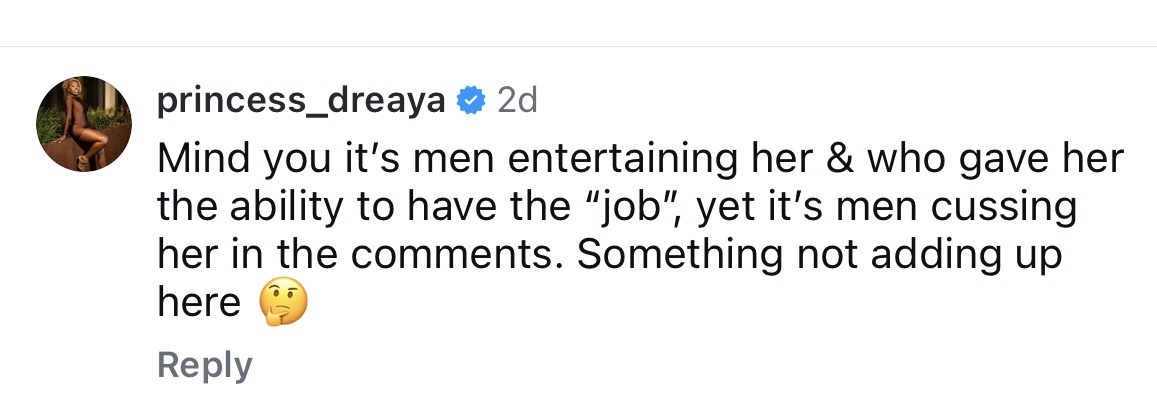
One widely engaged with response pointed out what many see as a contradiction in public judgement: “Mind you it’s men entertaining her… yet it’s men cussing her in the comments. Something not adding up here.” That sentiment taps into a recurring tension in these discussions, accountability versus participation, judgement versus consumption.
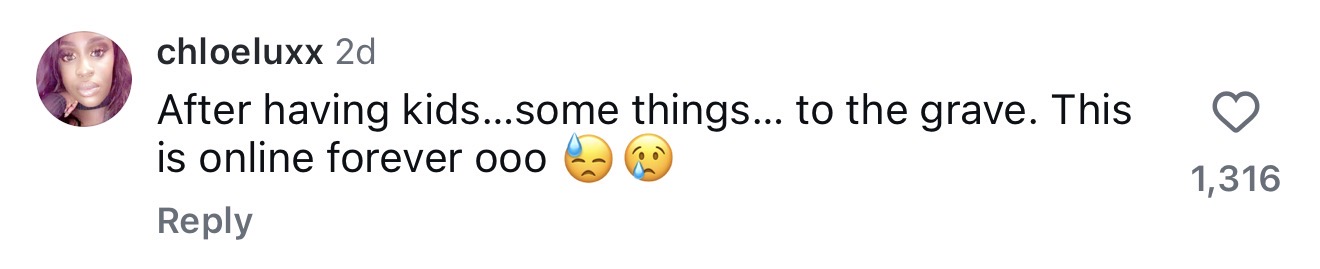
Elsewhere, reactions range from the cryptic to the cautionary. One user referenced “Emmanuel’s family right now,” hinting at private context the wider audience can only speculate about. Another took a more reflective stance on permanence, writing: “After having kids... some things... to the grave. This is online forever.” It is a reminder that in the age of screenshots and reposts, digital history rarely expires quietly.

As always with posts like this, the conversation quickly expands beyond the individual. Some users turned the moment into a broader commentary on financial decisions and life paths, contrasting long term wealth building with short term gains. Others shifted the lens towards mental health and social media exposure, suggesting that the intensity of reactions says as much about audience psychology as it does about the subject herself.
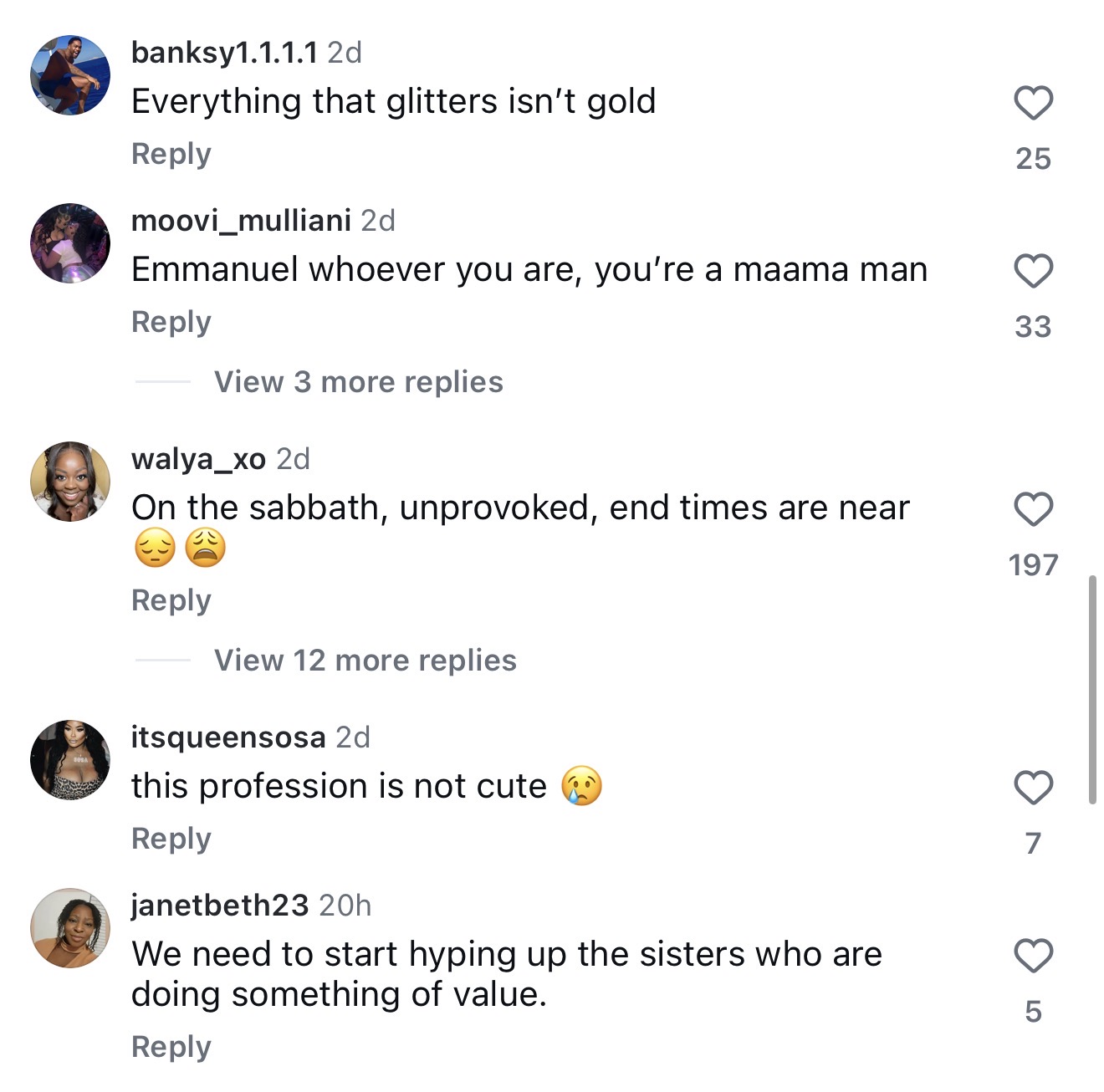
There were also more direct moral takes, with comments such as “This profession is not cute,” sitting alongside replies defending personal autonomy and challenging how quickly people rush to judgement. And in true Shade Borough fashion, some users even questioned the role of the platform itself in amplifying the story at all, effectively turning the mirror back on the media cycle.
What emerges is less a single narrative about Tawana, and more a familiar digital pattern: confession, amplification, judgement, defence, and then wider societal debate. In other words, the comment section becomes the story just as much as the video itself.
And it leaves a lingering question: when you strip away the noise, are the UK and US really that different in values and morals, or is everyone just trying to navigate the same struggle in different accents and attitudes, chasing stability and survival in the only ways they know how?
.png)


.png)
.png)
.png)
.svg)
.svg)
.svg)