.png)

1 December 2019 is often referenced by researchers as the date of one of the earliest identified COVID-19 infections in Wuhan, China—an event that would later signal the beginning of a global health crisis unprecedented in modern history. Although the precise origins and first human infection remain subjects of ongoing scientific study, an early analysis published in The Lancet in January 2020 documented a patient who developed symptoms on December 1, 2019, with no reported link to the Huanan Seafood Wholesale Market. This case became a significant reference point in attempts to trace the virus’s initial spread.
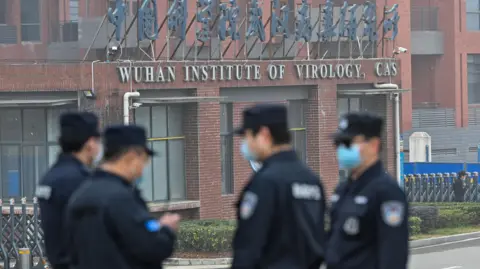
At the time, the patient’s illness attracted little international attention. Local hospitals in Wuhan were beginning to observe clusters of pneumonia cases with unusual clinical features, but the underlying cause had not yet been identified. It was not until late December 2019 that clinicians formally raised alerts about a mysterious respiratory infection affecting multiple patients.
By 31 December 2019, China notified the World Health Organization (WHO) of these atypical pneumonia cases—an announcement that marked the beginning of global awareness of what would later be named COVID-19.

Only in retrospect did December 1 take on historic importance. As scientists worked to reconstruct the timeline of the outbreak, the date emerged as one of the earliest known—but not definitively the first—symptomatic cases. Later research suggested the possibility of infections occurring even earlier in November, but evidence remains inconclusive.
Even so, the December 1 case is significant because:

Within weeks of the first reported clusters, the virus had spread rapidly in and beyond Wuhan. The WHO declared a Public Health Emergency of International Concern on 30 January 2020, and by 11 March, COVID-19 was classified as a global pandemic.
More than five years later, researchers continue to investigate the pandemic’s origins, transmission pathways, and early spread—efforts that rely heavily on these initial case timelines.
As the world looks back on December 1, it serves as a reminder of how a single, obscure medical case can become the starting point of profound global transformation. The date stands as a marker in history—a quiet beginning to a crisis that would ultimately reshape societies, economies, and health systems across the world.
%20(4).png)


%20-%202.PNG)
%202.PNG)
%20(5).png)
.svg)
.svg)
.svg)