

Sean “Diddy” Combs has taken a major legal step by filing an appeal with the United States Court of Appeals for the Second Circuit in New York, asking for his immediate release from prison or for the conviction that sent him to jail to be overturned or reduced. The filing argues the sentence was improperly influenced by evidence linked to charges he was acquitted of, and it calls on the appellate court to either order his release or send the case back for resentencing under proper legal standards. His legal team maintains this appeal could reshape how courts treat similar cases in future.
In new court papers submitted this week, Combs’s attorneys argued that the federal judge who sentenced the hip‑hop mogul exceeded his authority by allowing evidence from charges for which Combs was found not guilty to influence the length and severity of his prison term. Combs, 56, is currently serving a sentence of four years and two months at a federal facility in New Jersey after being convicted under the Mann Act, a statute that makes it unlawful to transport individuals across state lines for prostitution.
At his trial in Manhattan last year, a jury acquitted him of more serious racketeering conspiracy and sex trafficking charges, but found him guilty on the lesser counts related to transporting people for prostitution. Combs’s lawyers contend that his conviction on these lesser counts should have resulted in a significantly lighter sentence than the one imposed.
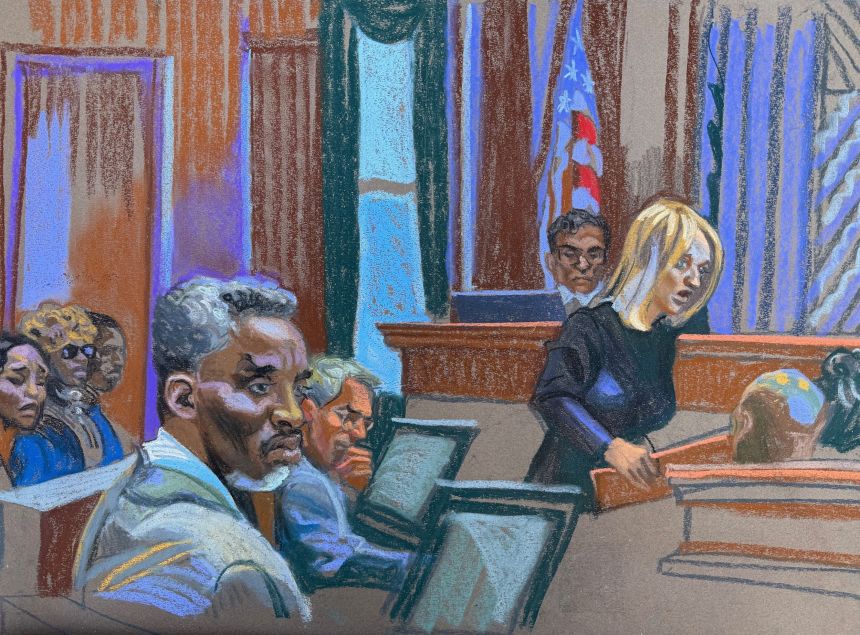
The appeal asserts that the trial judge took on the role of a “thirteenth juror” when he sentenced Combs in October, by permitting conduct related to the acquitted racketeering and sex trafficking charges to factor into his decision. The legal team wrote that similar offences generally result in sentences that are far shorter than the one Combs received, and noted that the jury did not find evidence of coercion. “Defendants typically get sentenced to less than 15 months for these offences, even when coercion, which the jury didn’t find here, is involved,” the appeal states. They argue that this disparity illustrates why the sentence is unjust and why the appeals court should intervene.
.jpeg)
The filing goes on to directly challenge findings the trial judge cited during sentencing. The lawyers wrote:
“The judge defied the jury’s verdict and found Combs ‘coerced,’ ‘exploited,’ and ‘forced’ his girlfriends to have sex and led a criminal conspiracy. These judicial findings trumped the verdict and led to the highest sentence ever imposed for any remotely similar defendant."
They argue that these judicial characterisations went far beyond the jury’s verdict, and that the sentence was thus based on a narrative the jury did not support.
Combs’s legal team has urged the appeals court to take one of several actions. They want the conviction on the prostitution‑related counts reversed outright, they want Combs immediately released from prison, or they want the case sent back to the trial judge with instructions to impose a sentence that adheres strictly to the jury’s findings and applicable law. The Second Circuit has not yet scheduled oral arguments on the appeal, and it remains unclear how long it will take before the court issues a decision.
At the centre of the legal dispute is how judges should treat evidence related to charges on which a criminal defendant was acquitted. In Combs’s case, the jury found him not guilty of the most serious allegations, but at sentencing the judge cited testimony about Combs’s personal conduct that the defence says was irrelevant to the Mann Act convictions. The appellate filing contends that this practice undermines the role of the jury and distorts the sentencing process.
The legal fight follows months of intense scrutiny of Combs’s case, which has drawn widespread media attention. The trial last summer heard testimony from several of Combs’s former girlfriends, including Casandra “Cassie” Ventura, who described years of a turbulent relationship that included graphic allegations of physical and sexual abuse. Ventura testified that Combs once dragged and struck her in a hotel hallway, and that he repeatedly pressured her into sexual encounters with others. Another former partner, identified in court as “Jane,” also testified to experiences she said were coercive and degrading. The trial included heart‑wrenching testimony that was shown to jurors during deliberations.

Despite these accounts, jurors rejected the government’s more serious charges of racketeering and sex trafficking, and they did not find that Combs used force, fraud, or coercion to commit the acts he was convicted of. That has formed the basis of his legal team’s contention that the sentencing judge wrongly imposed a sentence that effectively punished Combs for conduct the jury did not deem criminal under the most serious statutes. In urging the appeals court to correct what they describe as a miscarriage of justice, Combs’s lawyers framed the case as one with implications beyond their client, and as a test of how sentencing courts should respect jury findings.
.jpeg)
Combs’s current release date under his federal sentence is set for 2028, but if the appeals court grants his motion for immediate release or orders a resentencing with a reduced term, he could walk free much sooner. The filing also highlights disparities in sentencing practices for comparable offences, noting that defendants with similar convictions often receive far shorter federal terms. By asking for his immediate release, the appeal raises questions about sentencing uniformity and fairness in high‑profile criminal cases.
The appeal brief comes as Combs’s broader legal and public reputation continues to be debated. Since his conviction, there have been both supporters and detractors weighing in on social media and in public commentary about the case and its implications for other public figures facing criminal charges. Meanwhile, Combs remains in federal custody, separated from his family and his business interests, as his legal team pursues this latest bid for relief in the appellate courts.
.png)


.png)
.png)
.png)
.svg)
.svg)
.svg)