.png)

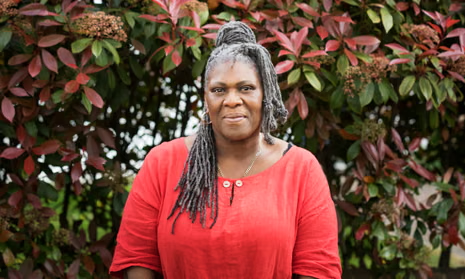
A woman has been convicted over the death of her five-year-old stepdaughter almost five decades after the child suffered catastrophic burns in a scalding hot bath. Janice Nix, 67, was found guilty at Isleworth Crown Court of the manslaughter of Andrea Bernard, who died after being forced into dangerously hot bathwater at a home in Thornton Heath, south London, in June 1978.
Nix was also convicted of cruelty towards Andrea’s older brother, Desmond Bernard, between October 1975 and June 1978, when he was aged between seven and nine.
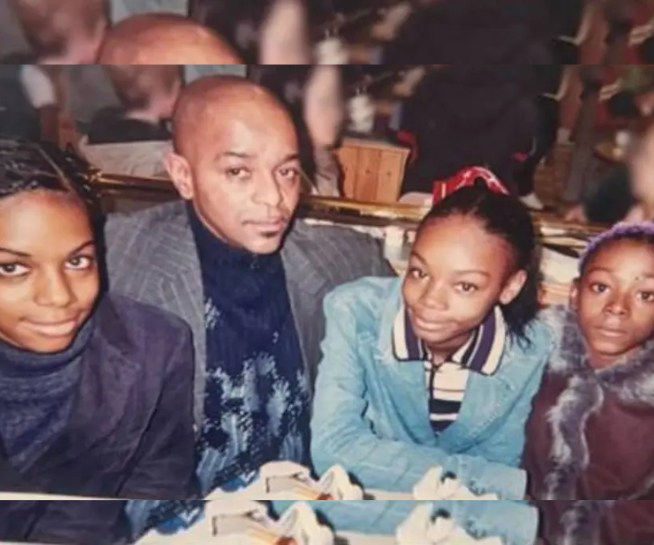
Andrea’s death had originally been ruled an accident. However, the case was reopened in 2022 after Desmond Bernard, now 56, approached police with a new account of what happened that day.
Nix cried in the dock as jurors delivered guilty verdicts on Tuesday.
During emotional evidence to the court, Bernard explained he had originally lied about Andrea’s death because he was terrified of further abuse from Nix.
He told jurors he had endured years of violence and intimidation while living with her.
Bernard said Nix beat him with a belt, burned him with cigarettes, bit him and even forced him to eat cat food as punishment.
Describing the events of June 6, 1978, Bernard recalled hearing Nix angrily shouting at Andrea after she allegedly ignored instructions not to leave the house and to help with cleaning.

He told the jury: “I could hear Janice shouting: ‘Get in the bath,’ and I could hear Andrea saying: ‘The bath is too hot mummy’ … Then I heard screaming and splashing.”
“Then I heard the screaming stopped and I could hear Janice calling Andrea to ‘wake up’.”
Bernard said when he entered the bathroom he saw his sister unconscious in the bath.
“I saw her limp body and her skin falling off her,” he told the court.
Andrea suffered burns to around 50 per cent of her body and died nearly six weeks later in hospital.
Bernard told jurors that after the incident, Nix pressured him into supporting a false version of events.
“She asked me to say it was an accident … and to say that we were in the garden when it happened and that she would never beat me again,” he said.
He explained that fear had stopped him from speaking out for decades.
“I couldn’t carry on dealing with it, so that’s what I did,” Bernard said of finally going to police.
“To place this burden where it should go.”

A burns specialist who gave evidence during the trial told jurors that the severity of Andrea’s injuries strongly suggested she had been forcibly held in the water.
The expert explained that a child exposed to water at such extreme temperatures would instinctively attempt to climb out of the bath immediately.
Prosecutors argued this meant Nix must have restrained Andrea while she was submerged in the scalding water.
At the time of the incident, Nix was still in her late teens and in a relationship with the children’s father, effectively acting as their stepmother.

Throughout the trial, Nix denied deliberately harming Andrea.
Jurors heard that during the original 1978 inquest, she claimed Andrea had bathed herself before later complaining about itchy legs and collapsing.
However, during the current trial, Nix admitted she had given a false account to the coroner.
She claimed panic and guilt over failing to supervise Andrea properly led her to lie.
“On hindsight now, I see my negligence as a teenager,” she told the court.
Nix insisted she did not realise the bathwater was dangerously hot.
“All I know is that she was in distress, her legs were red, they had bubbles on them … I didn’t know how hot the water was,” she said.
Following the verdicts, Bernard said he finally felt justice had been achieved for his sister.
“I am happy with the conviction, solely because she now must take responsibility for her actions, something she has to this day not done,” he said.
“Although this does not bring Andrea back or undo all the pain caused.”
Aisling Hosein from the Crown Prosecution Service said the case demonstrated that serious crimes would continue to be pursued regardless of how much time had passed.
“No matter how much time has passed since an offence takes place, the Crown Prosecution Service will always seek to prosecute perpetrators of these horrific crimes and ensure they face the consequences of their actions,” she said.
Nix was remanded into custody and is due to be sentenced at a later date.

Following the verdict, details of Nix’s dramatic criminal past and later career transformation have resurfaced, much of which she documented in her memoir, Breaking Out, written with Elizabeth Sheppard.
According to the memoir, Nix’s life spiralled deeper into crime following Andrea’s death. She described herself carrying firearms, organising high-value drug deals and driving around Brixton in a customised Vitara jeep featuring the words “Nasty Girl” painted across the side.
Her criminal record included multiple convictions and prison terms, including a nine-month sentence in 1985 for shoplifting, resisting arrest and missing probation appointments.
Reflecting on that period, Nix wrote: “Shoplifting? Dipping? What kind of pettiness was that? I was ashamed of the smallness of my crimes.
“I’d certainly learned from my mistakes, but what I’d learned was that I wanted to go harder – much harder. I made a big decision: as soon as I had done my time inside, I was stepping it right up. I was ready to rise to the next level.”
In 1992, she received a nine-year prison sentence for possession of Class A drugs with intent to supply.
The memoir details how her operation expanded across cities including Northampton, Birmingham and Leicester, with alleged links reaching Wales, the West Country and even Guyana.
During one trip to the South American country, Nix claimed she struck a deal with a major trafficker known as “the Captain”, who allegedly showed her a room filled with tightly wrapped packages containing what she believed to be around 100 kilos of drugs.
Nix also described carrying a Beretta Bobcat semi-automatic pistol after one of her associates was robbed.
Recalling a confrontation in a casino, she wrote: “He couldn’t speak a word. I placed my red Yves Saint Laurent bag in the middle of the table, and opened the clasp.
“My Beretta Bobcat gleamed blue-black against its blood-red lining, baring its perfect little teeth.”
She continued: “If this ever happens again, I won’t deal with it so lightly. You check?”
Despite her criminal lifestyle, Nix also described balancing motherhood and drug dealing simultaneously, including preparing her daughter for school while managing cocaine operations.
In the memoir, Nix wrote about a difficult upbringing in Leicester and a strained relationship with her mother.
She also described alleged abuse during childhood, writing: “Worst of all were the times when my uncle’s friend tried to stroke my knee with his hot, dry hand and push himself against me when nobody else was around.”
At the age of 16, she moved to London without informing her mother. There, she became involved in organised shoplifting groups stealing luxury goods from stores across the West End.
She later met Andrea and Desmond’s father, who worked as a chauffeur for the Trinidad and Tobago High Commission.
Nix wrote that being with him and his children felt like joining a “ready-made family”, though she later became dissatisfied with what she described as a quiet domestic life and returned to crime.

Despite spending years involved in organised crime, Nix eventually attempted to rebuild her life after prison.
While serving time at HMP Morton Hall in 2001, she completed training to become a prison “listener”, helping inmates experiencing emotional distress.
After applying for work from prison, she secured a role as a ward clerk at a community hospital in 2004 and later joined the London Probation Trust in 2014.
Nix went on to receive a diversity and engagement award from the Probation Service in 2015 and later spoke publicly about improving opportunities for women offenders.
“Instead of sending people to prison, I’d like to see far more opportunity for community resolution for women,” she wrote.
She also reflected on why she wanted to support vulnerable women rebuilding their lives after prison.
“I knew what it was like to have no solid ground at all beneath your feet,” she said.
“More than I had ever wanted anything before, I wanted to help these women rebuild their lives.”
.png)


.png)
.png)
.svg)
.svg)
.svg)