%2012.PNG)

A former National Lottery winner who scooped millions in a life-changing jackpot has been jailed after using his fortune to help set up and fund a sprawling illegal prescription drug operation worth an estimated £288 million.
John Colin Spiby, who won £2.4 million in the National Lottery in 2010, was found to have channelled his winnings into building an industrial-scale criminal network that manufactured and distributed counterfeit prescription medication, including fake diazepam, to customers across the UK.

What began as a rags-to-riches story ultimately unravelled into one of the most significant organised drug conspiracies uncovered in the region. Prosecutors told the court that Spiby used his lottery winnings to purchase properties, equipment and vehicles, helping to establish a sophisticated operation capable of producing millions of illegal tablets.
Investigators revealed that the network was run as a family enterprise, with close relatives playing key roles in the day-to-day running of the business. The operation was based at a rural cottage, which was used as a discreet manufacturing and distribution hub, allowing the group to operate away from public view.
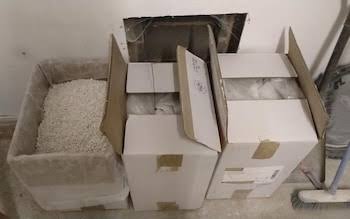
Police raids uncovered large quantities of counterfeit pills, pill presses, industrial mixing equipment and packaging materials, as well as firearms and ammunition. Officers said the level of organisation demonstrated a highly professional operation designed to mimic legitimate pharmaceutical production.

The court heard that Spiby, despite being in his 80s, was a central figure in the conspiracy and helped oversee the operation alongside family members, including his son. Several co-defendants were convicted for their roles, with the group receiving combined prison sentences totalling nearly 50 years.
Detectives described the case as a stark example of how legitimate wealth can be used to bankroll serious organised crime. They said the case also highlighted the dangers posed by counterfeit prescription drugs, which can contain unknown or dangerous substances and pose serious risks to public health.
.PNG)


.png)
.PNG)
.jpeg)
.svg)
.svg)
.svg)