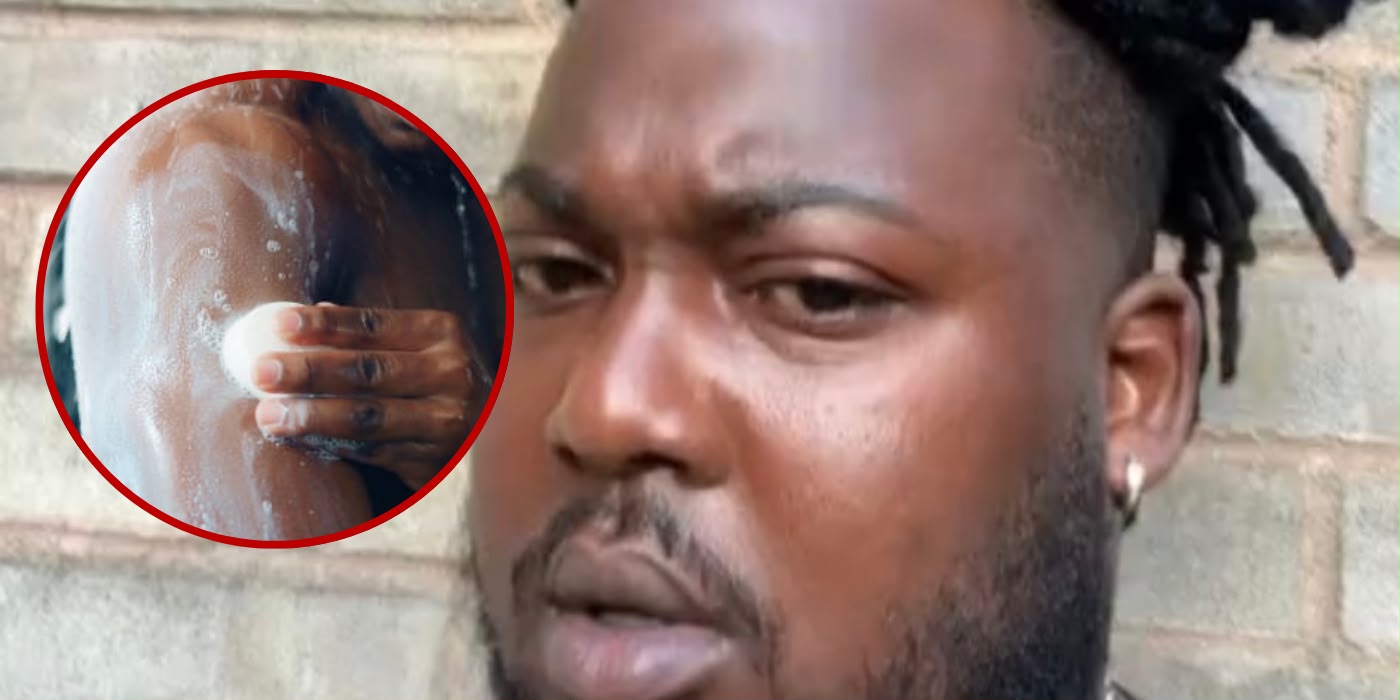

Content creator Quincy SMF has left viewers stunned after sharing an unusual conversation he overheard between a group of teenage boys at a football camp, with the TikTok creator revealing that several of them claimed they did not wash their bottoms.
Quincy, who is also a teacher, explained that creating content is not his main source of income and that he had been spending some of his summer working at youth clubs and camps while schools are on their six week break.
He said he had been helping at a football camp involving around 50 to 80 young people, the majority of whom were Black boys, and although he regularly hears conversations that make him laugh, one discussion left him genuinely concerned.
According to Quincy, the boys were chatting among themselves when the subject of washing their bottoms came up. One boy apparently said that he washed himself properly, only for another to question why he would do that.

The creator explained that the second boy described washing his bottom as being "kind of gay", prompting him to ask the other boys what their own habits were.
Quincy said the response left him shocked, claiming that many of the boys agreed they did not wash themselves properly because they associated the act with homosexuality. As the conversation continued, Quincy decided he could not simply listen without intervening. He said:
"So during this conversation, I had to interrupt because I can't lie, it was getting me mad. It was getting me really annoyed. I sat them all down."
The group, which Quincy estimated consisted of around 30 boys, were then questioned about their hygiene. He recalled asking them directly:
"What, so none of you man clean your nyash?"
According to Quincy, the room went quiet, with the boys seemingly unsure how to respond. The situation then became even more surprising when one of the boys reportedly argued that cleaning himself was forbidden for religious reasons.
"One of them got up, started going mad, started shouting at me, talking about, no sir, cleaning your bum is haram. Cleaning your bum is haram."
.jpeg)
The creator said he made the boy run laps around the football pitch while thinking about what he had said, although the wider point of his story was not simply to make fun of the boys. Instead, Quincy used the incident to highlight what he believes is a need for young people to receive clearer education about personal hygiene and looking after themselves.
He joked about the boys' reasoning, saying:
"It's more gay not washing your bum because you think he's gay."
Quincy then turned his attention to the wider issue, arguing that basic cleanliness should not be viewed as embarrassing or something that young men should avoid discussing.
"But cleanliness is next to godliness."
His frustration was clear as he questioned whether younger generations were receiving enough guidance about basic personal care. He ended by saying:
"Gen Z, what are you, man? Gen Alpha, you man are scaring me, man."
The video quickly attracted attention, with viewers reacting to both the humour of Quincy's story and the more serious issue sitting underneath it. One person commented:
"Education is deeply needed because our youth are living with no sense just street wise!"
Another, who claimed to work as a secondary school teacher, wrote:
"As a secondary school teacher, I can 100% smell that they don't wash their bums LOL!"
Others felt the story should not simply be treated as a funny anecdote, with one viewer saying:
"He made this story sound funny but this is a serious issue!"
Another comment focused on the potential impact on parents, saying:
"Imagine being their mums having to wash their underwear/boxers & having to witness the formula 1 skid marks created from this foolishness!!!"
While the conversation has largely been met with humour online, personal hygiene is an important part of young people's health, particularly during puberty. As children get older, hormonal changes can lead to increased sweating, more body oil and stronger body odour, meaning hygiene routines often need to become more thorough.
Guidance from NHS children's health services recommends encouraging teenagers to establish regular hygiene routines, including washing their bodies, hands and faces, brushing their teeth and taking regular showers or baths. During puberty, young people can also become more conscious of body odour and appearance, making conversations about hygiene particularly important for both physical health and confidence.
Health guidance also stresses that washing the bottom and genital area is part of basic personal hygiene. The NHS advises that the bottom area should be washed every day, while young people should use plain water or an appropriate emollient when washing the genitals because soap can be irritating or drying in that area.
Good hygiene is not only about smelling fresh or looking clean. Poor personal hygiene can contribute to discomfort, skin problems and infections, while also affecting a young person's confidence and how comfortable they feel around other people. NHS guidance therefore encourages parents and carers to establish healthy routines from a young age and have open conversations about why washing matters.
There has been plenty of online discussion in recent years about whether younger generations are becoming worse at looking after themselves, particularly when it comes to showering and other everyday hygiene habits. However, there is not strong, reliable UK evidence showing that Gen Z or Gen Alpha as a whole have worse personal hygiene than previous generations, so Quincy's experience should not be treated as proof of a wider generational decline.
There are also several reasons why young people may struggle with hygiene, ranging from not being taught effective routines to embarrassment, a lack of independence or simply not understanding why certain habits matter. Guidance for teenagers stresses that parents, carers and trusted adults should talk openly about hygiene rather than making the subject something shameful.
That makes Quincy's position as both a teacher and youth worker particularly relevant to the conversation. His reaction may have been delivered through humour and plenty of disbelief, but underneath the jokes was a genuine concern that a large group of young boys appeared to have picked up an idea about hygiene that needed correcting.
The fact that some of the boys reportedly associated cleaning themselves with being gay also raises a separate issue around the attitudes young people can develop when conversations about masculinity, sexuality and personal care become mixed together.
Ultimately, washing properly has nothing to do with sexuality, and teaching young people that basic hygiene is simply part of looking after themselves is an important message.
.png)


%20(1).png)
.png)
.png)
.svg)
.svg)
.svg)