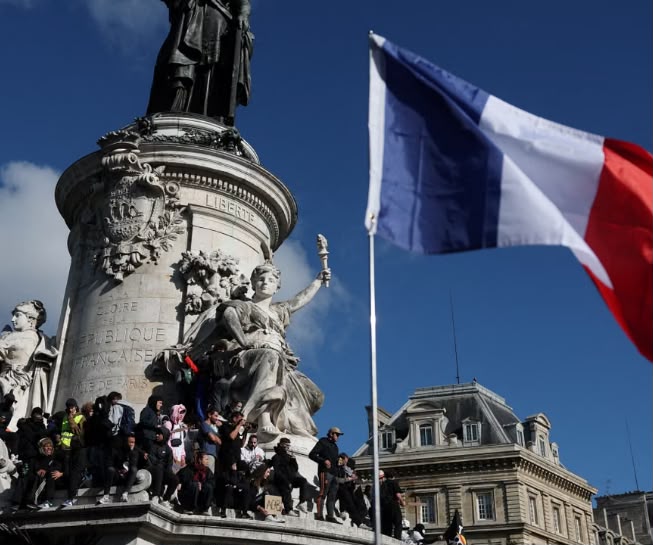

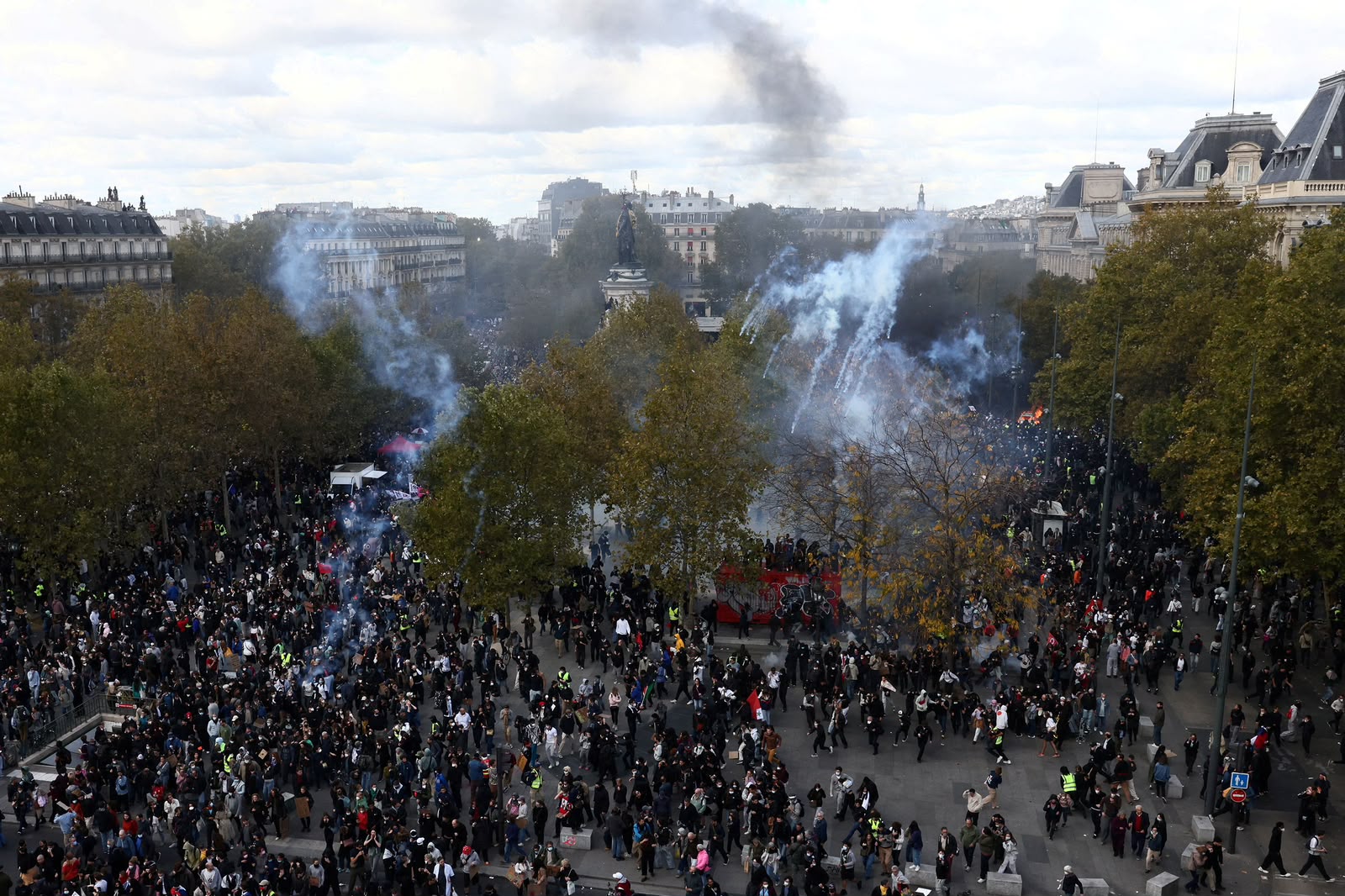
France has been rocked by widespread protests and violent clashes after demonstrators gathered across the country to express their frustration over rising living costs, declining public services and the government's handling of the economy.
The demonstrations, which took place on Saturday, 17 October, brought together students, trade unionists, workers and supporters of the Yellow Vest movement, with hundreds of thousands of people participating in marches across the country.
According to reports, estimates of the turnout ranged from approximately 550,000 people, according to France's Interior Ministry, to 800,000, according to the General Confederation of Labour (CGT), one of the country's major trade unions.
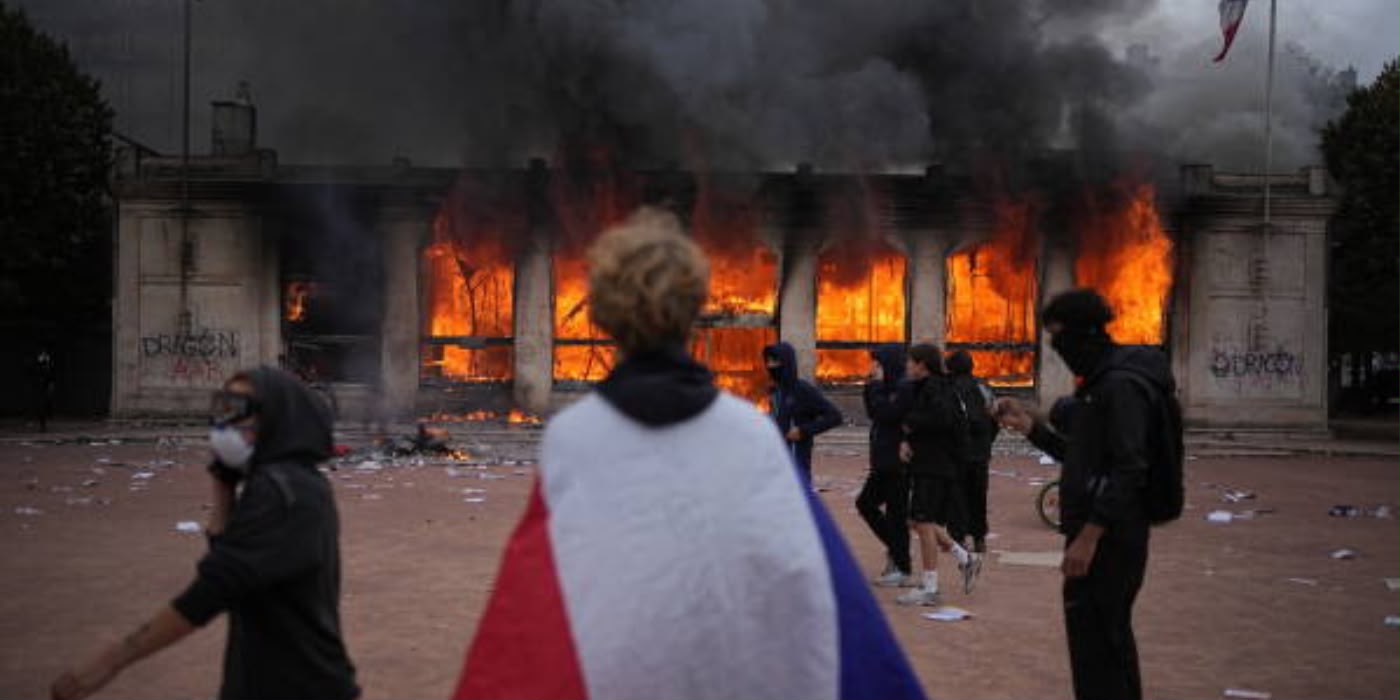
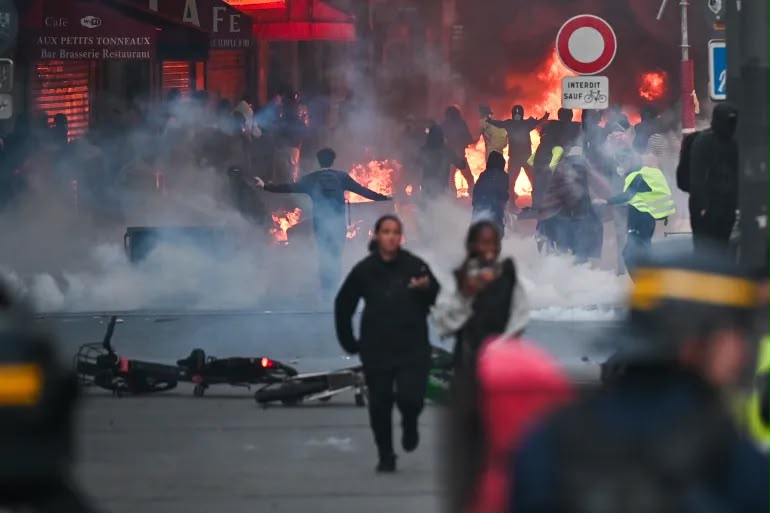
Although many demonstrations began peacefully, tensions escalated in several cities, including Paris, Lyon, Marseille and Limoges, where incidents of looting, arson and clashes with police were reported.
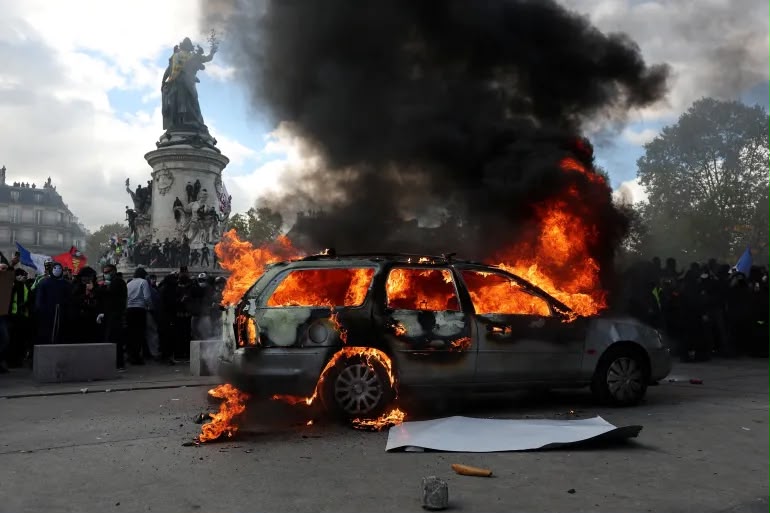
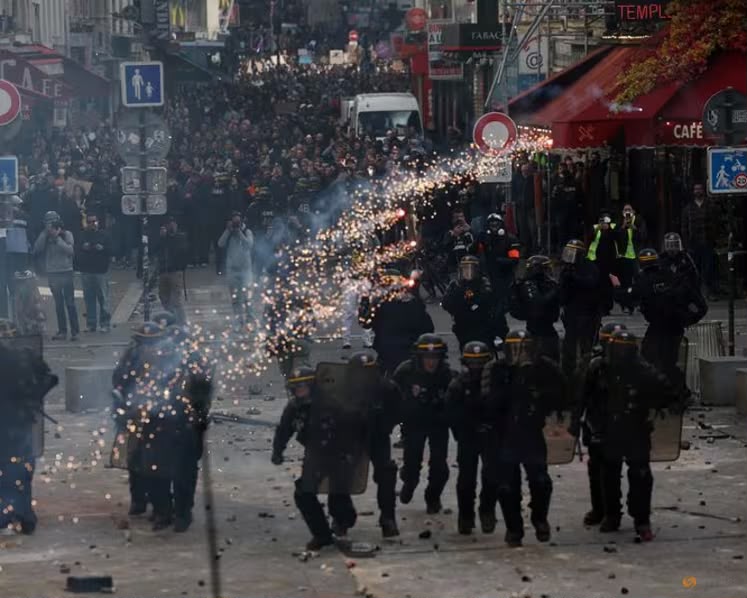
Businesses were targeted, vehicles were set alight and public buildings sustained damage. In Limoges, a fire at the town hall became one of the most significant incidents of the unrest, while confrontations elsewhere saw police deploy tear gas and water cannons to disperse crowds.
The violence has raised concerns about the impact of the demonstrations on local communities, particularly business owners and workers whose livelihoods depend on the areas affected. The demonstrations have been fuelled by a combination of economic pressures and dissatisfaction with public services, with rising prices making it increasingly difficult for some households to manage everyday expenses.
Fuel, food and energy costs have been among the concerns raised by protesters, alongside demands for better wages and greater investment in essential services.
Students have also played a significant role in the movement, with initial demonstrations focusing on conditions in schools, staff shortages and a lack of resources in education. Concerns have also been raised about university admissions and the wider challenges facing young people seeking access to education.
The protests subsequently expanded as workers and other members of the public joined the demonstrations, bringing their own grievances about household finances, employment conditions and government policy.
For some participants, the demonstrations represent an opportunity to challenge what they see as a growing gap between the cost of living and the income available to ordinary people.
The movement has also drawn comparisons with France's Yellow Vest protests, which began in 2018 over a proposed fuel tax increase before developing into a broader expression of anger about living costs, inequality and the government's economic policies. The latest demonstrations have revived similar concerns, with activists attempting to unite people from different backgrounds around issues they believe affect the wider population.
The scale of the demonstrations and the violence that followed have placed pressure on the French government to address both the public's concerns and the damage caused during the unrest.
Prime Minister Sébastien Lecornu blamed far-left extremists for contributing to the disorder and insisted that the government would not give in to violence. President Emmanuel Macron also condemned the violence and pledged to bring those responsible to justice.
Authorities have made hundreds of arrests in connection with the disturbances, while police officers have also been injured during confrontations with demonstrators. The response from law enforcement has attracted scrutiny, with reports of injuries among protesters prompting further questions about the use of crowd-control measures.
While officials have focused on restoring order, the protests have highlighted the difficulty of addressing the underlying frustrations that brought so many people onto the streets.
For students, the demands include improved school conditions and more resources for education. For workers and households, the concerns extend to wages, fuel prices and the affordability of everyday life.
The involvement of trade unions and Yellow Vest activists has also given the demonstrations a broader reach, bringing together groups with different priorities but overlapping concerns about the country's economic and social direction.
The unrest has also prompted discussion online, with people debating the scale of the demonstrations and whether the French public's willingness to protest reflects a stronger sense of collective action. One person commented:
“The French demonstrate a remarkable sense of collective solidarity when it comes to defending their social rights boy. United as a nation!!”
Another compared the response in France with public reaction in Britain, writing:
“France is all action while the UK just love to moan…”
A third person also highlighted the contrast between the two countries, commenting:
“France have been standing on business since the 13th Century and united. Meanwhile, in the UK it’s divide and conquer and tax.”
However, others questioned the violence accompanying some of the demonstrations, arguing that damaging businesses and public property could undermine the concerns being raised by protesters.
One person wrote:
“So they are angry at the living costs but they are going around burning hard working people’s things. How does that make sense.”
The differing reactions reflect the wider debate surrounding the demonstrations, with some viewing the protests as an expression of solidarity over shared economic concerns, while others have criticised the destruction and disruption affecting local communities.
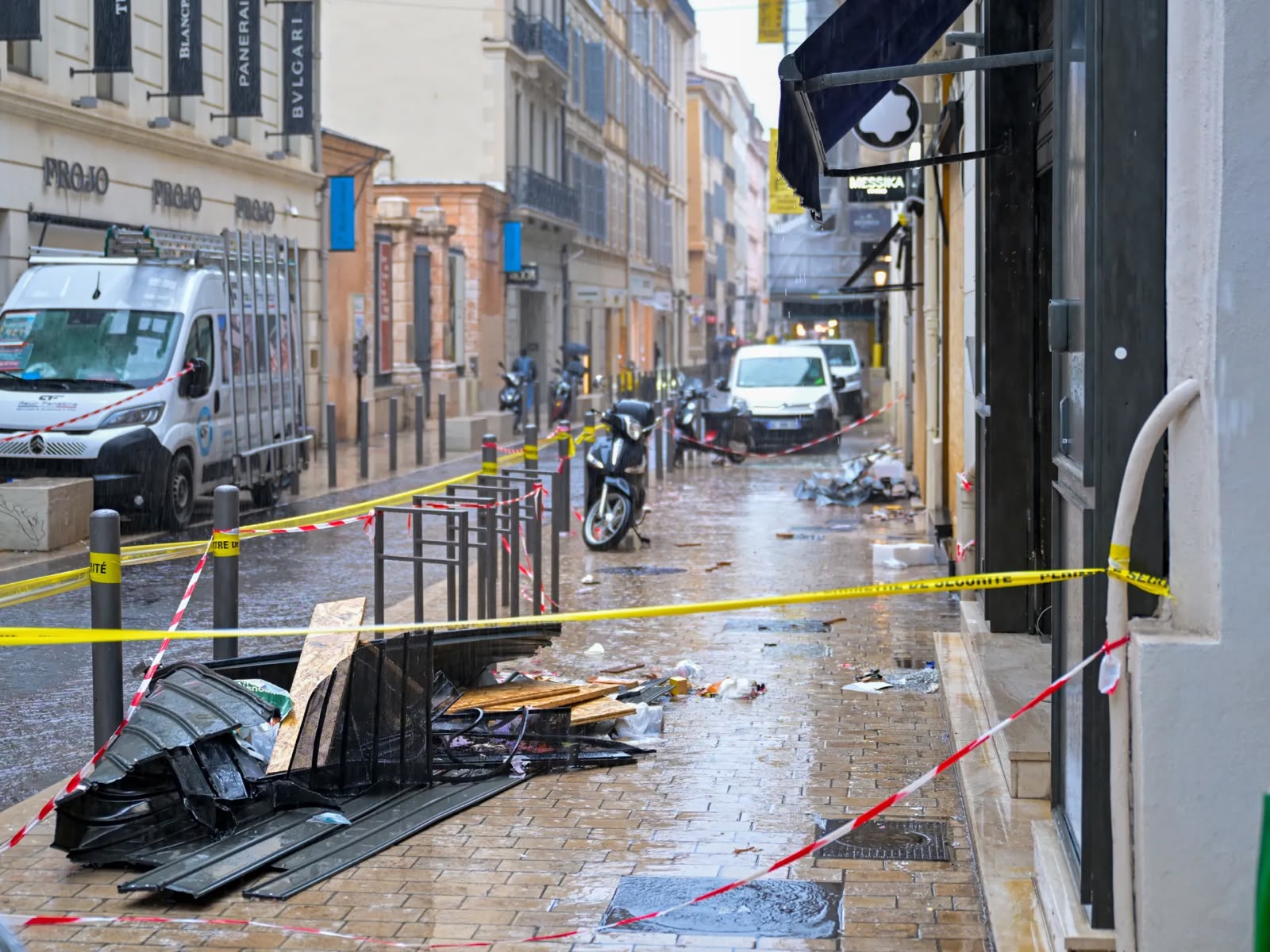
As France continues to deal with the aftermath, the central issues surrounding living costs, education and public services remain unresolved. The demonstrations have brought those concerns into sharp focus, while the violence has added another challenge for authorities seeking to restore calm without overlooking the frustrations that prompted people to take to the streets.