
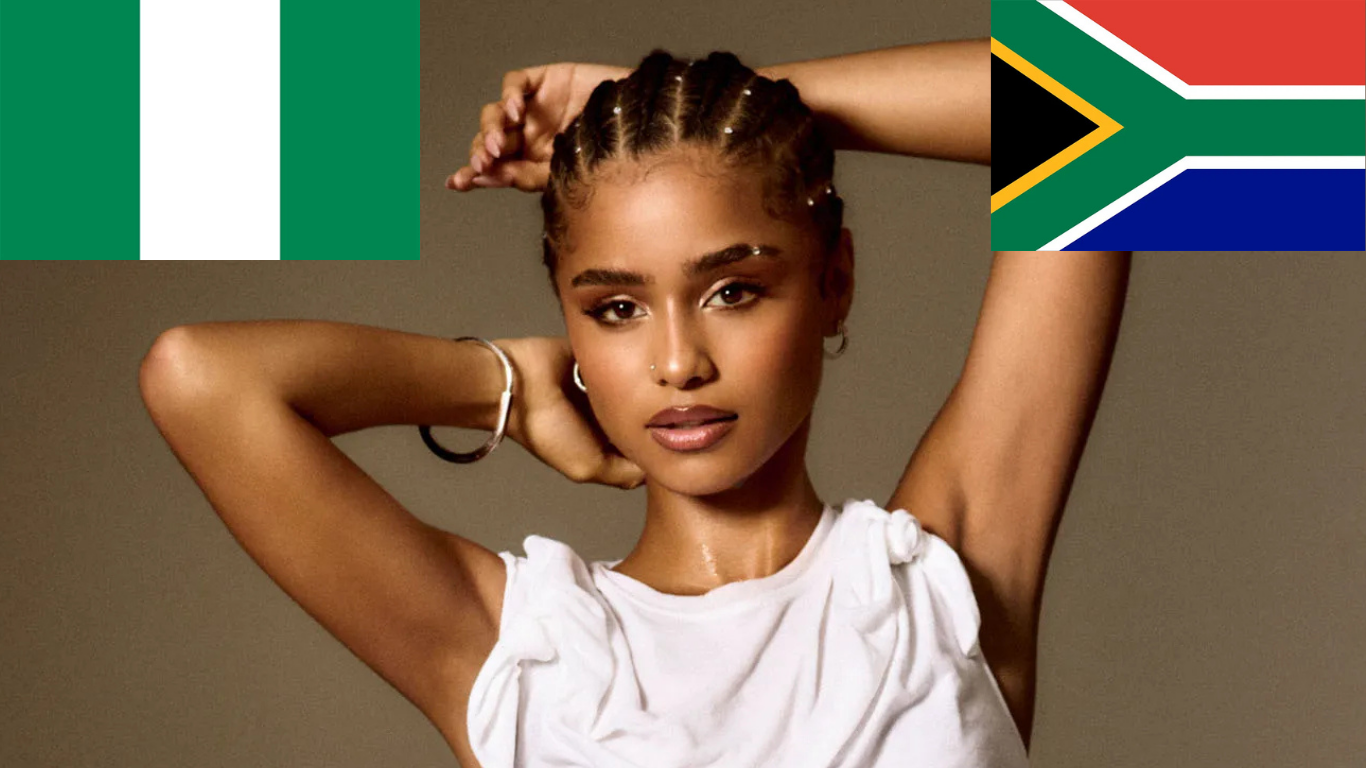

South African music star Tyla has found herself at the centre of a growing controversy after Lagos was quietly removed from the schedule of her upcoming world tour, just days after the dates were first announced. The Grammy Award-winning singer unveiled her international tour on Monday in support of her newly released album, APOP*. The original itinerary listed 34 cities across several continents, including stops in Lagos, Johannesburg, and Cape Town.
However, by Friday, an updated version of the tour schedule appeared on her official website with Lagos no longer included. Neither Tyla nor her representatives have publicly explained the change.
The development comes amid increasing pressure from some Nigerians who have called on the singer to cancel any planned performances in the country due to rising tensions over anti-migrant sentiment in South Africa.
Relations between Nigeria and South Africa have been strained in recent years following repeated allegations of xenophobic attacks against foreign nationals, including Nigerians living in South Africa. Nigerian authorities, alongside other African governments, have previously criticised South Africa for not doing enough to prevent violence targeting migrants.
Recent demonstrations in South Africa demanding the removal of undocumented migrants have further intensified concerns. The unrest has reportedly led thousands of foreign nationals, including many Nigerians, to leave the country through repatriation programmes and chartered flights.
Although officials from both nations have engaged in diplomatic discussions aimed at easing tensions, the issue has increasingly spilled into the cultural and entertainment spheres.
On Wednesday, Nigerian activists launched an online petition urging authorities to block Tyla from entering the country until what they describe as xenophobic attacks in South Africa are addressed. Within days, the campaign attracted thousands of signatures.

The singer has also faced criticism on social media, with some Nigerian users questioning her silence on the issue and urging her not to perform in the country. Comments under posts promoting the tour reflected frustration among those who believe influential public figures should speak out against anti-migrant hostility.
Tyla has not publicly responded to the criticism or requests for comment.
The debate has extended beyond the singer herself. South African comedian and television host Trevor Noah recently faced similar scrutiny after appearing in a promotional campaign for South Africa's tourism sector.
Critics argued that the former Daily Show presenter was highlighting the country's attractions while remaining silent about concerns over xenophobia. The advertisement attracted significant online backlash, with some users accusing South Africa of creating an unwelcoming environment for migrants.
Reports have also suggested that some South African performers have experienced professional consequences elsewhere on the continent. Earlier this year, South Africa's Justice Minister, Mmamoloko Kubayi, revealed that an unnamed local artist had reportedly lost multiple performance opportunities because of the negative perception surrounding the country.
She warned that such developments could have broader implications for South Africa's international reputation.
The South African government has defended its handling of the situation, insisting that law enforcement agencies have acted against individuals involved in unlawful behaviour. Officials have highlighted the arrest of hundreds of people following recent protests while maintaining that the country has the right to regulate immigration and enforce its laws.
As criticism of Tyla continues, many commentators have questioned whether artists should be held accountable for political tensions between nations.
Nigerian activist and former presidential candidate Omoyele Sowore argued that responsibility for addressing xenophobia lies primarily with governments rather than entertainers. Writing on social media, he stated that musicians should not automatically be blamed for the actions of political leaders unless there is evidence they actively support such behaviour.
Earlier this year, Tyla secured her second Grammy Award in the Best African Music Performance category, defeating several high-profile Nigerian nominees. She had previously won the category's inaugural award in 2024, overcoming competition from internationally recognised Nigerian artists such as Burna Boy and Davido.
.png)


%20(1).png)
.png)
.png)
.svg)
.svg)
.svg)