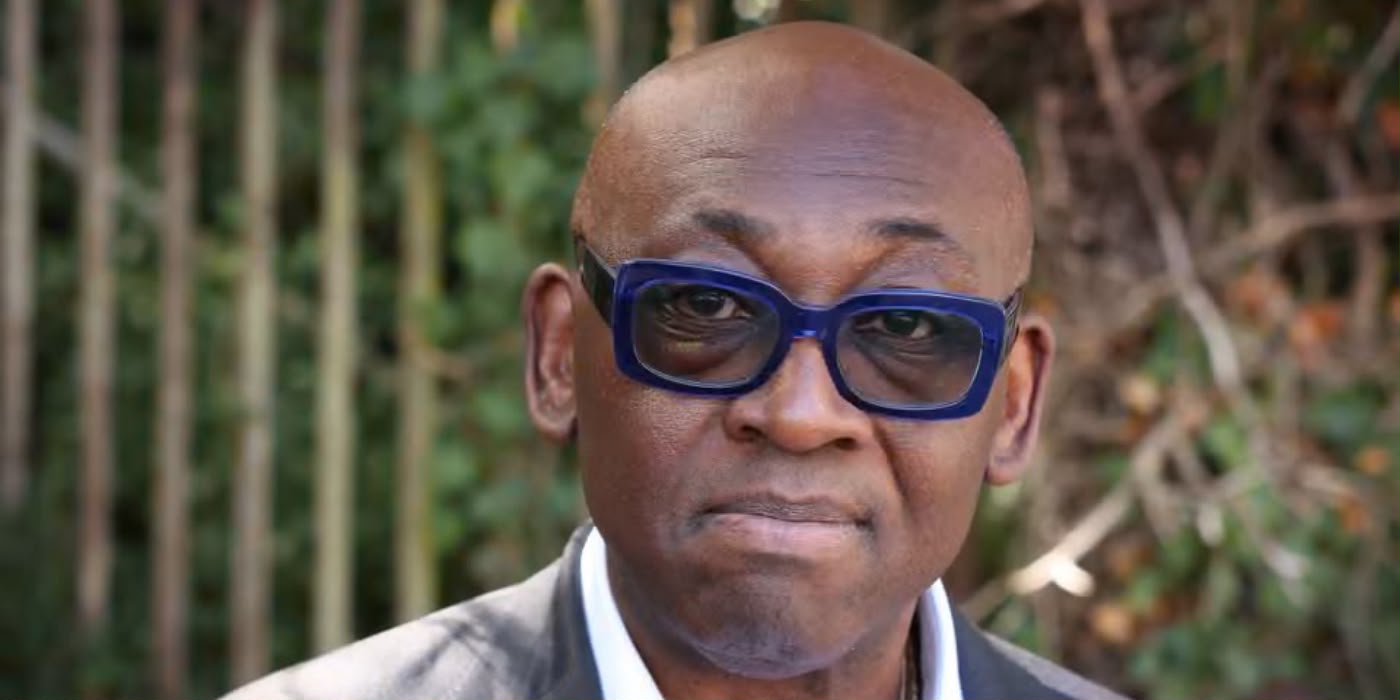

Black barrister Stephen Akinsanya has spoken out about his experience at an east London court after a security guard reportedly assumed he was a defendant and told him he could not park in the court's car park.
Akinsanya, who was awarded an OBE in June for his work raising awareness of youth knife crime and its prevention, said the incident happened around four weeks ago and left him questioning how much progress has actually been made in tackling racism within the criminal justice system.
According to Akinsanya, he arrived at the same court where he had previously worked as a junior lawyer, only to be stopped by a security guard who told him he was not allowed to park there because the car park was for legal professionals rather than defendants.
.jpeg)
The barrister said the situation immediately reminded him of an experience he had when he first qualified in 1993. At that time, he said he had also been mistaken for someone facing trial when entering the same court. More than three decades later, he found himself experiencing what he viewed as a strikingly similar assumption, despite arriving at the building as a barrister and wearing professional attire associated with the role.
Speaking about the latest incident, Akinsanya said he could not understand why people continued to make assumptions about someone's position based on their race.
He said the experience was particularly frustrating because, aside from his gown, he was wearing the attire of a barrister, something he believed court security staff should have been familiar with. When he challenged the guard, Akinsanya said the man became embarrassed and eventually raised the barrier to allow him into the car park.
The incident was discussed during a Criminal Bar Association podcast titled Being Black in Criminal Justice, Is the Profession Racist?, where Akinsanya reflected on his experiences within the legal profession and the wider issue of racial assumptions in the justice system.
He argued that, despite seeing greater diversity entering the profession during his career, there remains a perception that Black people appearing in court are more likely to be defendants than lawyers.
The issue has prompted a strong reaction online, with some people describing the experience as another example of racial discrimination within professional spaces. One person commented:
“This is so disrespectful. Absolute disgrace.”
Another said:
“That wasn’t a mistake, it was direct discrimination.”
A third shared their own experience of being judged by assumptions about their role, writing:
“I can imagine this happens to a lot of block people. I remember starting my job at the NHS, all new starters, regardless of role, go through the same training and the trainer asked if I was a HCA and she was taken aback when I told her my role and then made a sly comment about it later…”
While individual experiences cannot establish the reason behind every incident, the reaction reflects a wider frustration among some Black professionals who say they continue to encounter assumptions about their position, qualifications or status.
For Akinsanya, the problem extends beyond one interaction with a security guard. He has argued that the perception of Black people within the criminal justice system remains an issue that needs to be addressed more broadly.
His concerns come as new judicial diversity figures show that Black representation among judges in England and Wales remains particularly low. Data published last month showed that the proportion of judges who are Black had increased only slightly over the previous decade, from 1.4% to 1.6%. Black people make up around 4% of the population of England and Wales.
There are currently 79 Black judges among 5,337 judges and tribunal members, according to the figures cited by The Guardian. Of those, 43 are serving in courts, while there is currently only one senior Black court judge, Mrs Justice Margaret Obi.
Akinsanya believes greater representation is needed and has called for targets to increase the number of Black judges, alongside an organisation that would be responsible for monitoring whether those targets are being achieved.
His concerns have also been echoed by other senior figures within the legal profession. Laurie Anne-Power KC argued that greater oversight is needed to examine the judicial appointment process and determine whether differences exist between the outcomes for white and Black applicants.
Keir Monteith KC, who has previously been involved in work examining racial inequality within the judiciary, also raised concerns about the confidential assessments used during judicial appointments. He argued that candidates should be assessed on what they bring to an interview rather than information shared privately outside the formal process.
The issue of Black legal professionals being mistaken for defendants is also not new. In 2020, courts officials apologised after two Black barristers reported being mistaken for defendants, with one, Alexandra Wilson, saying she had been misidentified three times in a single day. Another barrister, Luke McLean, was subsequently mistaken for a defendant twice at a London magistrates' court.
Those earlier cases led to renewed calls for better training among court staff, with concerns that assumptions about race and professional status could affect people's experiences within the justice system.
.jpeg)
For Akinsanya, experiencing a similar assumption more than 30 years after he first entered the profession has made the issue particularly difficult to ignore. He has acknowledged that the Bar has become more diverse during his career, but believes that progress in representation has not necessarily removed the assumptions faced by Black professionals.
His experience has therefore become part of a much larger conversation about what equality within the legal system should actually look like. Greater numbers of Black barristers entering the profession represent progress, but questions remain over representation at the highest levels and the everyday experiences of those already working within it.
For Akinsanya, being mistaken for a defendant was not simply an awkward moment at a court entrance. Coming after a similar experience when he was a newly qualified lawyer, it raised a much bigger question about whether assumptions that have followed Black professionals for decades are really disappearing.
And as the figures continue to show a significant gap in Black representation among judges, his call for greater accountability suggests the conversation is far from over.
.png)


%20(1).png)
.png)
.png)
.svg)
.svg)
.svg)